
Gucci’s Equestrian Silk Scarves: A Heritage Woven with Style and Strategy
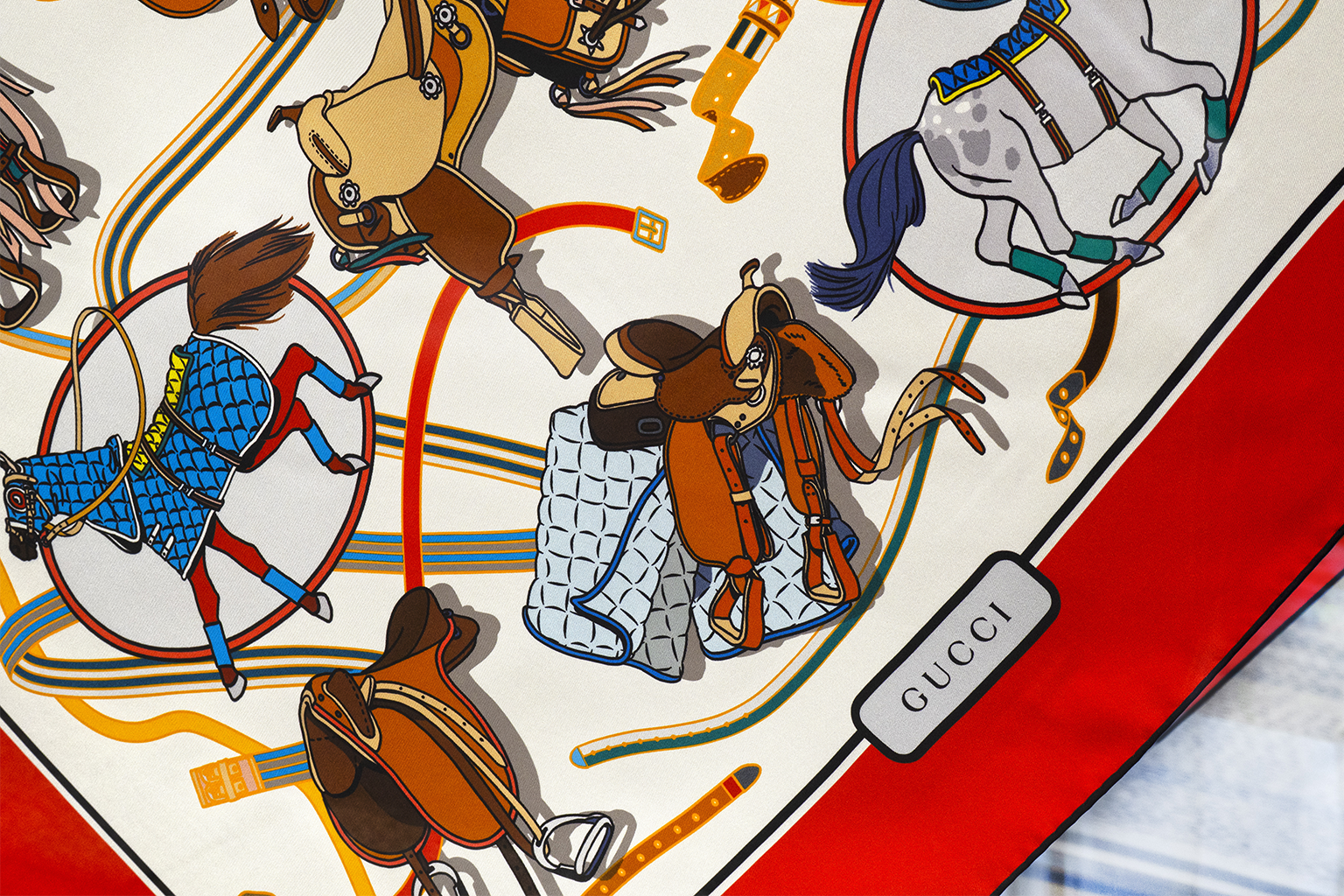
From Riding Arenas to Runways Gucci’s Equine Motifs Define Luxe Accessory Culture
Introduction
There are few symbols in fashion as immediately recognisable as Gucci’s horsebit and equestrian motifs. From belts and loafers to ready-to-wear and outerwear, these elements speak of a house that not only understands its heritage but also knows how to reinvent it. Yet among the many canvases on which these themes have been expressed, none are quite so evocative, so richly layered in meaning, and so enduring as Gucci’s silk scarves. More than mere accessories, these scarves have become a canvas for storytelling, a medium that blends the heritage of European riding culture with Italian craftsmanship and modern fashion sensibilities.
This article explores how Gucci’s equestrian themed silk scarves have evolved, why they remain relevant to a luxury-focused audience, and how they continue to serve as strategic brand assets in a crowded fashion marketplace. Through historical context, detailed product references, and interpretive analysis, we examine why a simple square of silk can convey cultural meaning far beyond its dimensions.
A Tradition Begins: The Roots of Gucci’s Equestrian Vocabulary
Gucci’s origins are inseparable from travel and leather craft. The company was founded in Florence in 1921 by Guccio Gucci, who had spent formative years working in London hotels. Surrounded by luggage, saddlery, and the paraphernalia of upper-class British travel, he returned to Italy with a clear vision: to craft objects that combined the practicality of artisan handwork with the aesthetic refinement of elite culture.
This early focus on leather, travel and riding gear naturally led to equestrian cues becoming part of the house’s visual lexicon. Riding was not merely a sport but a marker of social identity, linked to aristocratic lifestyles and savoir-faire. Gucci absorbed and repurposed these codes across its product lines. The horsebit, a simple metal ring and bar used in real bridles, first appeared as decorative hardware on leather goods in the 1950s and quickly became a defining motif. With time, this image migrated from hardware onto textiles, particularly silk scarves, where it gained a narrative and expressive dimension.
The Silk Scarf as Storyteller
Silk scarves occupy a unique place at the intersection of art and fashion. Unlike garments that are tailored to fit bodies, scarves are fluid, multifunctional canvases. They can be tied, draped, folded and layered, making them dynamic carriers of visual narrative.
Gucci’s interpretation of the equestrian theme often invokes multiple cues at once, horsebit motifs, bridles, rein patterns, stirrups, belts, and even stylised chains that mimic harness links. Consider the Printed silk twill carré featuring a GG Horsebit, stirrup and chain print, a rich black and beige piece that exemplifies this language in textile form. This scarf encapsulates the house’s historic vocabulary with understated elegance and craftsmanship. The repeated motif evokes both symbolic continuity and contemporary taste.
Available on Gucci’s official site, this piece demonstrates how a simple square of silk can become an emblematic expression of a brand’s identity. It neither shouts nor whispers but engages in a quiet, confident dialogue about heritage and modernity.
Colour, Composition and Craft in Modern Expressions
Gucci’s current scarf offerings show how the brand keeps its heritage alive while appealing to modern tastes. The equestrian theme adapts to colour, pattern, and material innovation. For example, the Printed silk twill carré in blue and light blue reimagines the horsebit and belt motif in a fresh palette that feels both contemporary and wearable. With its all-over Horsebit belts print, the scarf feels dynamic rather than static, a testament to Gucci’s ability to refresh its core codes without diluting them.
Similarly, the Interlocking G Horsebit printed silk twill carré in ivory shows how archival elements can be intertwined with geometric design to create a piece that feels both familiar and new. Here, classic codes, the interlocking G and the horsebit, appear within a structured ribbon motif, suggesting forward-looking design without abandoning tradition.
Another variation of this motif appears in Gucci’s seasonal collections, where blends of equestrian references with floral or graphic elements add layers of meaning. The consistent thread, however, remains the horsebit and its ability to convey a story about history, movement, and identity in a compact, wearable form.
Why Equestrian Motifs Endure
At first glance, equestrian imagery might seem niche, perhaps even archaic. Yet its continued prominence in Gucci scarves speaks to a deeper resonance. Riding culture historically symbolises discipline, elegance, and hierarchical status, traits that align seamlessly with luxury fashion’s aspirational narratives.
Gucci has managed to render these cues timeless by constantly contextualising them within broader cultural conversations. Rather than treating the horsebit as a static logo, the brand uses it as an interpretive device, recalibrating it through colour, scale, and pattern. In doing so, Gucci ensures that what could easily feel like a relic becomes relevant again and again.
From a branding perspective, this is a strategic triumph. A motif that is visually distinctive yet flexible allows the brand to maintain coherence across seasons and product categories. The equestrian theme, especially when woven into a tactile, tangible object like a silk scarf, creates a thread of continuity that helps sustain both recognition and desirability in global markets.
The Artistic Dimension of Gucci Scarves
It would be remiss not to acknowledge the artistic heritage that elevates Gucci scarves beyond mere accessories. Historically, illustrators such as Vittorio Accornero de Testa contributed to the rich narrative tapestry of Gucci’s silk scarves, crafting detailed designs that were appreciated as wearable art. While Gucci’s current pieces are more directly tied to brand codes, the spirit of artistic storytelling persists.
The use of motifs, whether equestrian or otherwise, shows a deep respect for artisanship and visual expression. Each scarf feels like a microcosm of Gucci’s broader design philosophy, where imagination meets legacy. It also reinforces the idea that luxury goods do not merely serve functional purposes but embody cultural narratives.
Gucci’s equestrian themed silk scarves exemplify an exceptional blend of heritage, craftsmanship and branding acumen. Through decades of evolution, these scarves have carried equine motifs from riding fields into the realm of global luxury fashion. They succeed because they are rooted in authentic history yet remain flexible enough to adapt to contemporary tastes.
Whether approached from the standpoint of fashion history, cultural symbolism, or brand strategy, these scarves offer rich insights into how a luxury house can sustain meaning across time. They remind us that motifs, when thoughtfully developed and consistently applied, can become powerful vectors of identity.
In a world where fashion constantly chases novelty, Gucci’s equestrian silk scarves stand as proof that true innovation often springs from deep understanding and thoughtful reinterpretation of one’s own story.