
How Much Should a Real Silk Scarf Cost?
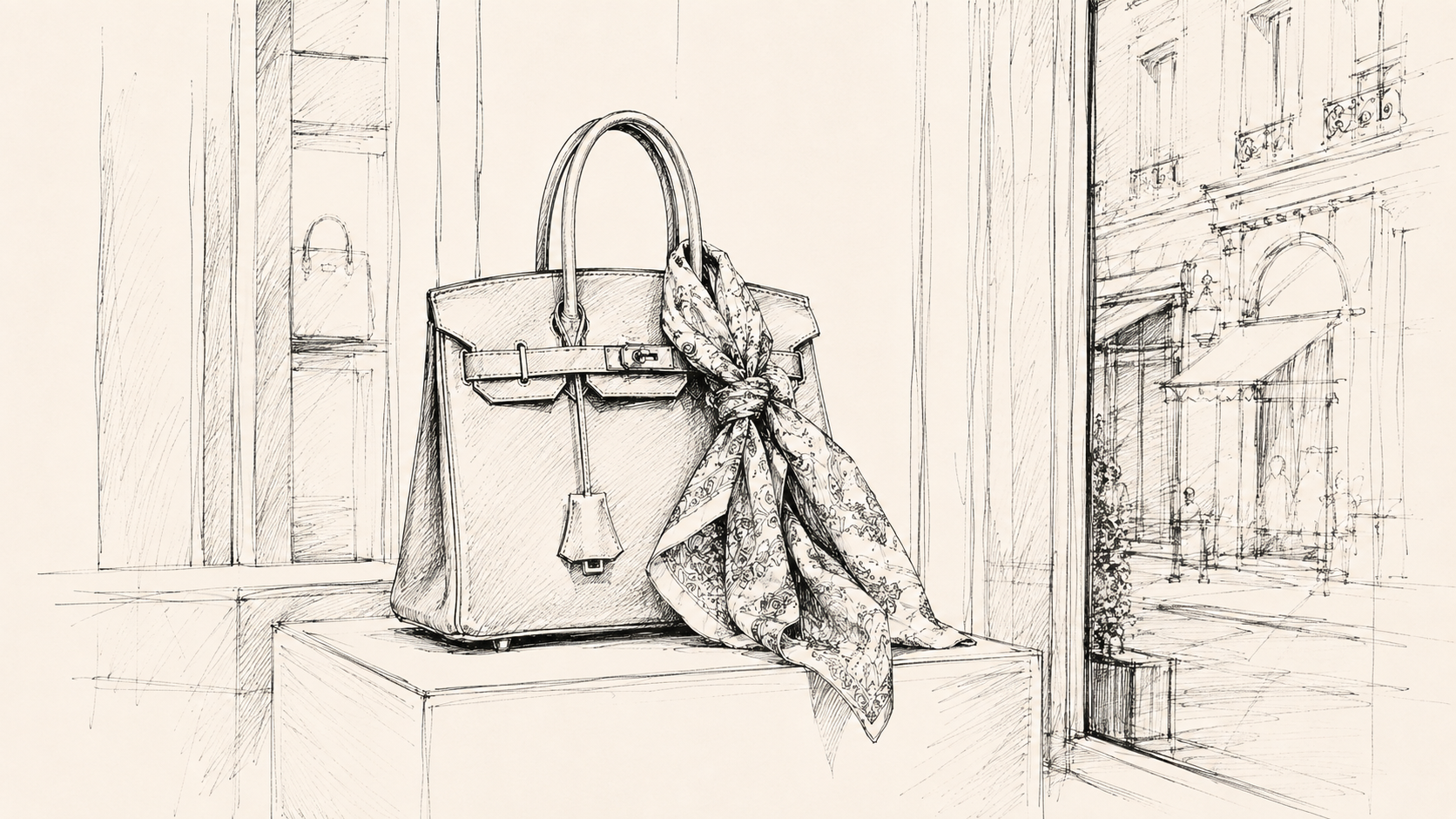
A real silk scarf can cost anywhere from £30 to well over £1,000, yet price alone reveals surprisingly little about quality. Some expensive scarves command their value through craftsmanship, rarity, artistic significance, and heritage production methods. Others rely heavily on branding. At the same time, genuinely excellent silk scarves can often be found at modest prices from specialist makers and independent ateliers.
Understanding what a silk scarf should cost requires an understanding of silk itself. The answer lies not in fashion, but in agriculture, textile production, weaving, printing, finishing, labour, design, and the economics of luxury goods.
What This Article Covers
By the end of this article, you will understand:
• Why silk scarves vary so dramatically in price
• The difference between inexpensive silk and premium silk
• How weaving, printing and finishing affect value
• What distinguishes luxury scarves from mass-produced alternatives
• When a high price reflects quality and when it reflects branding
• Realistic price expectations across different segments of the market
• How to judge whether a silk scarf is genuinely worth its asking price
The Short Answer: What Should a Real Silk Scarf Cost?
A genuine silk scarf made from natural silk fibres generally costs between £50 and £250 if produced to a good standard. Below this range, compromises usually appear somewhere in the production process. Above this range, the purchaser increasingly pays for artistic value, craftsmanship, exclusivity, brand heritage, limited production, or collector appeal.
A simple machine-printed silk scarf manufactured at scale may retail for £40 to £80. A well-made silk twill scarf with carefully developed artwork and quality finishing often falls between £120 and £350. Hand-rolled, artist-designed scarves produced in limited quantities commonly occupy the £200 to £600 range. Beyond that point, pricing increasingly reflects rarity, collectability and brand positioning.
The crucial point is that silk itself is not particularly expensive compared with the cumulative cost of transforming raw fibre into a finished luxury accessory.
Why Silk Is More Expensive Than Most Fabrics
Silk remains one of the most labour-intensive natural fibres in the world. Unlike cotton or synthetic materials, silk originates from a biological process that has changed remarkably little over centuries.
The most common luxury silk comes from the domesticated silkworm, Bombyx mori. Each cocoon consists of a single continuous filament that can stretch hundreds of metres. Thousands of cocoons are required to produce enough thread for commercial weaving.
The process involves cultivating mulberry trees, feeding silkworms, harvesting cocoons, carefully unwinding filaments, twisting fibres into yarn, weaving fabric, preparing it for printing, and finally finishing the material. Every stage introduces cost.
Natural silk production also faces limitations that synthetic fabrics avoid. Silkworms cannot simply be scaled infinitely like petrochemical manufacturing. Production remains tied to biological cycles, agricultural conditions and specialised expertise.
This inherent scarcity explains why real silk has always occupied a different economic category from polyester, viscose or nylon.
Not All Silk Is Created Equal
One of the most common misconceptions is that all silk possesses roughly the same quality. In reality, silk exists across a wide spectrum.
Mulberry silk is generally regarded as the finest and most consistent variety. The silkworms feed exclusively on mulberry leaves, producing long, uniform fibres with a smooth surface and distinctive lustre.
Other silks, including tussar, eri and muga silk, possess different characteristics and may appear more textured or irregular. These variations are not necessarily inferior, but they create different aesthetics and performance qualities.
Weight also matters enormously. Silk scarves are often measured in momme, a traditional Japanese unit that indicates fabric density. A lightweight scarf may feel delicate and airy. A heavier silk twill can feel substantial, structured and luxurious.
Two scarves may both be described as "100% silk" while exhibiting dramatically different levels of quality, durability and visual richness.
The Hidden Costs of Luxury Silk Scarves
Consumers often focus on the fabric itself, but fabric frequently represents only a fraction of the finished product's cost.
Artwork development can require weeks or months of work. Complex illustrations, hand-painted designs and original commissions carry significant creative costs before a single scarf is printed.
Printing introduces another major expense. High-end silk scarves often use sophisticated screen-printing processes involving multiple colour separations. Some luxury designs require dozens of screens to achieve their final appearance.
Colour matching on silk is notoriously difficult. Silk absorbs dyes differently from many other fabrics, meaning production requires technical expertise and repeated testing.
Finishing is another overlooked factor. Hand-rolled edges remain one of the most recognisable hallmarks of premium scarves. Rather than folding and machine-stitching the perimeter, skilled artisans roll and stitch the edge by hand. The process is slow, demanding and difficult to automate.
When examining a luxury scarf, much of its value resides in these invisible decisions rather than the raw material alone.
When Price Reflects Quality and When It Reflects Branding
A £300 scarf and a £900 scarf may not differ dramatically in terms of silk quality.
This reality surprises many consumers. Beyond a certain point, pricing often reflects factors beyond physical production.
Luxury fashion houses invest heavily in flagship stores, global marketing campaigns, celebrity endorsements, fashion shows, packaging, logistics and brand management. These costs become embedded within retail pricing.
That does not mean such scarves are overpriced. Cultural value forms part of luxury economics. Buyers may value design history, artistic legacy, collectability or emotional significance alongside material quality.
However, consumers seeking the best ratio of craftsmanship to price frequently find exceptional value among specialist silk makers, independent artists and smaller luxury producers. These businesses often direct a greater proportion of the retail price toward the product itself rather than large-scale brand infrastructure.
The question therefore becomes not whether a scarf is expensive, but what precisely the buyer is paying for.
How to Judge Whether a Silk Scarf Is Worth the Price
Several indicators provide clues about genuine value.
First, examine the fabric. High-quality silk should possess depth rather than superficial shine. Cheap silk often appears glossy in a flat, synthetic way. Premium silk tends to reflect light with greater complexity.
Second, inspect the print quality. Colours should appear crisp and intentional. Fine details should remain sharp. Registration between colours should feel precise.
Third, examine the finishing. Hand-rolled hems, clean stitching and careful construction often signal higher production standards.
Fourth, consider originality. A scarf featuring unique artwork created specifically for that piece carries greater intrinsic value than generic patterns reproduced endlessly across factories.
Finally, evaluate transparency. Producers willing to discuss materials, production methods, artists and manufacturing processes often demonstrate greater confidence in the product itself.
Price becomes easier to understand when viewed as the combined cost of materials, skill, creativity and scarcity.
The Different Price Tiers of Real Silk Scarves
Although there are exceptions, the market generally divides into recognisable bands.
At £30 to £80, buyers typically encounter entry-level silk scarves produced in larger quantities. These can offer genuine silk but often feature simpler printing and machine finishing.
Between £80 and £250 lies the strongest value segment. Many specialist brands, independent designers and quality manufacturers operate here. This range frequently provides an excellent balance between craftsmanship and affordability.
From £250 to £600, production quality often becomes noticeably elevated. Limited editions, hand-finishing, original artwork and more sophisticated manufacturing processes become increasingly common.
Above £600, scarcity, collectability, artistic significance and luxury positioning often become major contributors to price. Material improvements may still exist, but they rarely increase in proportion to cost.
This pattern mirrors many luxury sectors. Beyond a certain threshold, buyers acquire meaning, heritage and exclusivity as much as physical product.
Why Some Vintage Silk Scarves Cost More Than New Ones
The secondary market reveals another important truth about value.
Certain vintage silk scarves command prices far beyond their original retail cost. This phenomenon occurs because scarcity eventually becomes more important than production expense.
Discontinued designs, historically significant prints, collaborations with notable artists and rare production runs can develop collector demand over time.
In these cases, a scarf functions almost like a print, illustration or piece of decorative art. Its value becomes tied to cultural relevance and rarity rather than textile manufacturing alone.
This explains why some collectors view exceptional silk scarves not simply as fashion accessories, but as wearable works of art.
A real silk scarf should generally cost between £50 and £250 for good quality, although exceptional examples can justify significantly higher prices. The most important lesson is that silk alone does not determine value.
The true cost of a silk scarf emerges from a combination of fibre quality, weaving, printing, finishing, design, craftsmanship and rarity. Understanding these factors transforms the buying process. Instead of asking whether a scarf is expensive, a more useful question emerges: what exactly is being paid for?
The answer often reveals far more about quality than the price tag itself.
Frequently Asked Questions
How can I tell if a silk scarf is real silk?
Real silk typically feels smooth but not slippery, drapes naturally, regulates temperature well, and reflects light with depth rather than a plastic-like shine. The fabric should feel cool initially and warm quickly against the skin.
Is a £50 silk scarf good quality?
A £50 silk scarf can be good quality, particularly from a specialist maker. However, production methods, printing quality and finishing may be simpler than those found in higher-priced scarves.
Why are some silk scarves over £1,000?
Very expensive silk scarves often derive their value from brand heritage, rarity, collectability, limited production, artistic significance and luxury positioning rather than material cost alone.
What is the best silk for a scarf?
Mulberry silk is generally considered the finest silk for scarves due to its long fibres, smooth texture, durability and consistent lustre.
Does a higher momme count mean better quality?
Not necessarily. A higher momme count indicates a heavier silk fabric. Quality depends on fibre consistency, weaving, finishing and intended use rather than weight alone.
Are hand-rolled edges important?
Hand-rolled edges are widely regarded as a mark of premium craftsmanship because they require skilled manual work and create a refined finish that is difficult to replicate by machine.