
How Silk Takes Colour: The Secrets Behind Vibrant, Lasting Prints for Silk Scarves
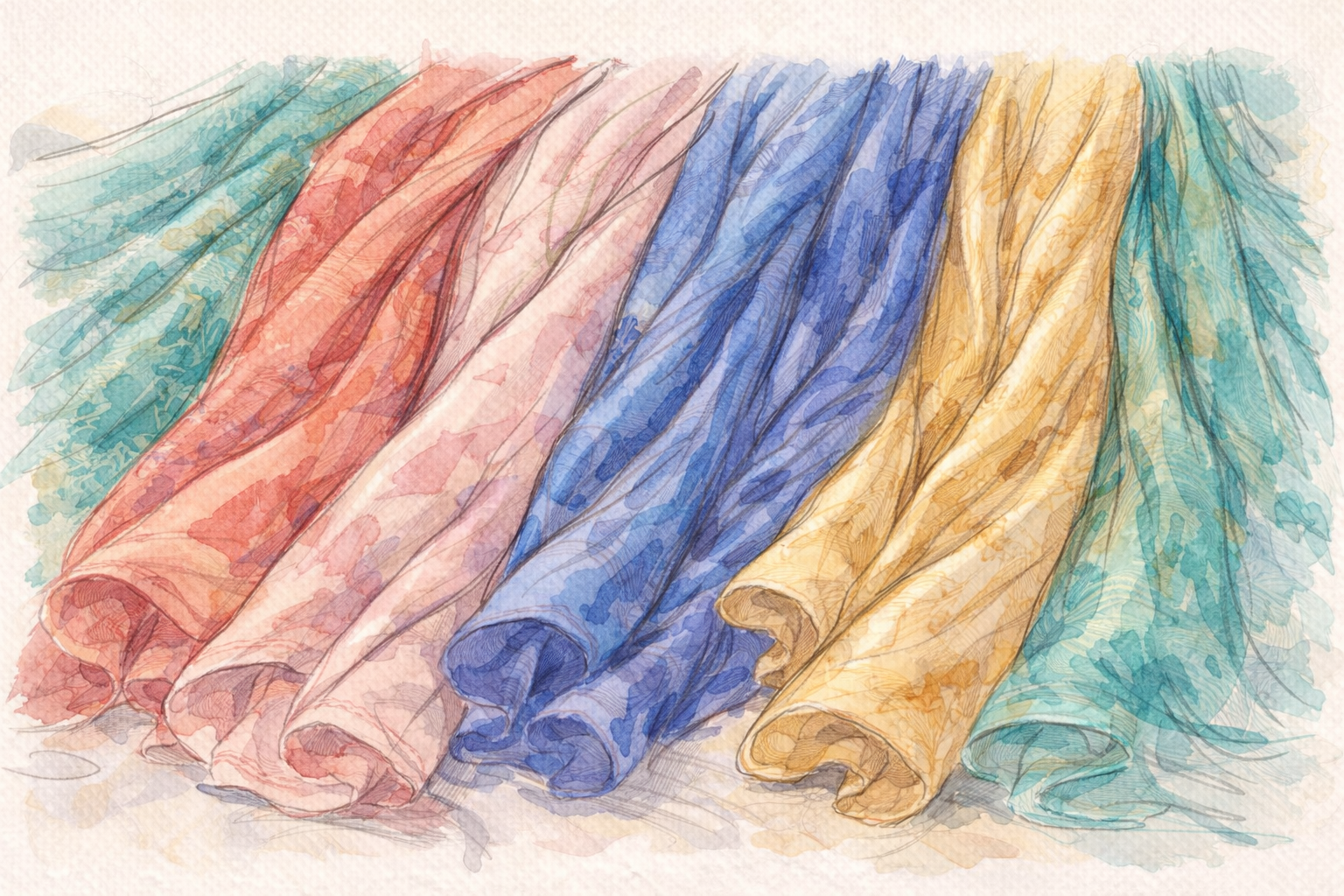
The science, artistry and craftsmanship that transform pure silk into luminous, enduring colour
Silk’s remarkable ability to absorb and reflect colour comes down to its unique protein structure, smooth fibre surface, and affinity for specialised dyes. From traditional hand dyeing to advanced digital printing, the way silk takes colour determines the vibrancy, depth and longevity of a scarf’s design. Understanding the chemistry, craftsmanship and finishing processes behind silk printing not only enhances appreciation for luxury scarves but also reveals why quality silk pieces hold their brilliance for decades when properly cared for.
Silk has always held a curious power over colour. It does not merely carry pigment. It seems to animate it. Reds appear deeper, blues more resonant, and even the softest neutral acquires a quiet luminosity when laid upon fine silk. Anyone who has held a well printed silk scarf up to the light will recognise this phenomenon. The fabric appears to glow from within rather than simply display colour on its surface.
This is not romantic exaggeration. It is chemistry, structure and craft working in concert.
To understand how silk takes colour so vividly, we must begin with the fibre itself.
Silk is a natural protein fibre composed primarily of fibroin, produced by the Bombyx mori silkworm. Unlike plant fibres such as cotton, which are cellulose based, silk’s protein structure contains amino acids with reactive groups that bond readily with certain dyes. These reactive sites allow colour molecules to attach themselves firmly to the fibre at a molecular level. In practical terms, this means that when silk is dyed correctly, the colour does not merely sit on the surface. It becomes part of the fibre.
Equally important is silk’s physical structure. Each filament is smooth, triangular in cross section, and semi translucent. This triangular shape refracts light, contributing to silk’s natural sheen. When dye penetrates the fibre, light interacts not only with the surface but also with the interior of the filament. The result is depth. Colour appears layered, almost dimensional.
This interplay between structure and light is the first secret behind vibrant silk scarves.
The second lies in the dyes themselves.
Historically, silk was coloured using natural dyes derived from plants, insects and minerals. Madder for reds, indigo for blues, cochineal for crimson. These dyes formed complex bonds with silk’s protein structure, often requiring mordants to fix the colour. Today, while natural dyes remain revered in artisanal contexts, most luxury silk scarves rely on acid dyes or reactive dyes specifically formulated for protein fibres.
Acid dyes, despite their name, are not harsh. They require an acidic environment to bond effectively with silk. When heat is applied, the dye molecules migrate into the fibre and attach to those reactive amino acid groups. The process is controlled with precision, as temperature, pH and timing all influence the final shade.
Reactive dyes go a step further by forming covalent bonds with the fibre. These bonds are exceptionally strong, resulting in improved wash fastness and light fastness. In other words, the colour remains stable over time, resisting fading when exposed to light or gentle laundering.
It is worth noting that dye choice is not simply a technical decision. It is a branding one. A luxury house known for saturated jewel tones may prioritise dyes that maximise chromatic intensity. A brand devoted to soft heritage palettes might adjust formulations to create subtler absorption. The chemistry shapes the aesthetic identity.
Printing technique also plays a decisive role.
Traditional screen printing, still favoured by many high end scarf makers, involves applying layers of colour through individual screens. Each hue is printed separately, often requiring meticulous alignment. The dye paste penetrates the silk, and the fabric is then steamed to fix the colour. This steaming stage is crucial. Heat allows the dye to fully bond, unlocking the vibrancy silk is capable of delivering.
The advantage of screen printing lies in its richness. Layers of colour can overlap slightly, creating nuanced transitions. Minor variations from batch to batch lend character. For collectors, these subtleties are part of the charm.
Digital printing, by contrast, uses advanced inkjet technology to deposit microscopic droplets of dye onto silk. The precision is extraordinary. Fine details, painterly gradients and photographic imagery become possible. After printing, the silk is steamed and washed to remove excess dye and fix the design permanently.
There was once scepticism around digital printing in luxury circles, yet the technology has matured significantly. When executed on high quality silk with proper fixation, digital prints can achieve remarkable clarity and longevity. For contemporary brands seeking intricate storytelling within a scarf’s square, digital methods open new creative territory.
However, printing is only part of the story.
Pre treatment of silk is essential. Raw silk contains sericin, a gummy protein that must be removed through a process known as degumming. This reveals the true lustre of the fibroin fibre and ensures even dye penetration. Inconsistent degumming can lead to patchy colour or diminished brilliance.
Equally, post dyeing processes determine durability. Thorough washing removes unfixed dye molecules, preventing bleeding. Careful drying maintains fibre integrity. In the highest quality production, scarves are inspected under calibrated lighting to assess colour accuracy. Slight shifts can occur depending on humidity or water composition during dyeing, so expert oversight is indispensable.
There is also the question of weight and weave.
A classic silk scarf often uses 14 to 18 momme silk. Momme measures weight and density. Heavier silk can absorb more dye, yielding richer colour saturation. Twill weaves, with their subtle diagonal rib, interact with light differently from plain weaves. This affects how colour is perceived. A navy on silk twill may appear deeper than the same dye on silk chiffon because of how the weave scatters and reflects light.
These technical nuances matter enormously in luxury positioning. Consumers may not articulate the science, but they recognise quality instinctively. A scarf that glows with stable, refined colour communicates craftsmanship. It signals investment, heritage and permanence.
Colour longevity is another vital consideration.
Two metrics are often referenced in textile testing: wash fastness and light fastness. Wash fastness measures resistance to colour loss during laundering. Light fastness assesses how well colour withstands prolonged exposure to sunlight. High quality silk scarves, when dyed and fixed correctly, perform impressively on both counts. That said, silk remains a delicate fibre. Extended exposure to direct sunlight will gradually soften even the finest dyes. Proper storage and mindful care are part of preserving vibrancy.
From a cultural perspective, silk’s relationship with colour has always been symbolic. In imperial China, specific hues signified rank. In Renaissance Europe, brilliantly dyed silks denoted wealth. The ability to achieve stable, intense colour on silk was historically rare and expensive. Today’s advanced dye chemistry may have democratised access, but the aura remains.
For contemporary designers, understanding how silk takes colour informs creative strategy. A painterly motif might rely on silk’s capacity for subtle tonal shifts. A bold graphic print depends on crisp dye boundaries and saturated pigmentation. The material itself becomes a collaborator.
There is also an environmental dimension worth acknowledging. Modern dye houses increasingly invest in closed loop water systems and low impact dye formulations. Efficient digital printing can reduce water consumption compared with traditional methods. Responsible colour is becoming part of brand storytelling, and rightly so.
Ultimately, the secret behind vibrant, lasting silk prints is not one single factor. It is an ecosystem of decisions.
The fibre must be properly prepared. The dye must be chemically compatible. The printing technique must be precise. The fixation process must be controlled. The finishing must be meticulous. When each stage is executed with integrity, silk rewards the effort with extraordinary luminosity.
Perhaps that is why a truly exceptional silk scarf feels different. The colour does not shout. It resonates. It catches light softly, shifting with movement. Years later, when unfolded from its box, it retains its clarity.
Silk does not simply take colour. It transforms it.
In an era of fast fashion and fleeting trends, that transformation carries weight. It speaks of patience, expertise and respect for material. For collectors, designers and connoisseurs alike, understanding the science deepens appreciation. The next time you drape a silk scarf around your shoulders, consider the quiet alchemy woven into its threads.
Colour, after all, is not accidental. On silk, it is earned.
FAQ’S
Why does silk hold colour better than cotton?
Silk is a protein fibre with reactive amino acid groups that bond strongly with acid and reactive dyes. Cotton is cellulose based and requires different dye chemistry, often resulting in a flatter appearance.
What makes silk scarves so vibrant?
The triangular structure of silk fibres refracts light, creating natural sheen. When dye penetrates the fibre, this structure enhances depth and luminosity.
Do digital prints on silk fade quickly?
Not when produced properly. High quality digital printing followed by correct steaming and washing can achieve excellent colour fastness comparable to traditional methods.
How can I prevent my silk scarf from fading?
Store it away from prolonged direct sunlight, avoid harsh detergents, and consider professional dry cleaning for valuable pieces.
Does heavier silk produce better colour?
Heavier silk, measured in higher momme weight, can absorb more dye and often appears richer, though weave and finish also influence the final effect.
Are natural dyes better for silk?
Natural dyes can produce beautiful, nuanced shades, but modern synthetic dyes generally offer superior consistency and longevity.