
The Silk Museum, Macclesfield: Where British Silk Finds Its Voice
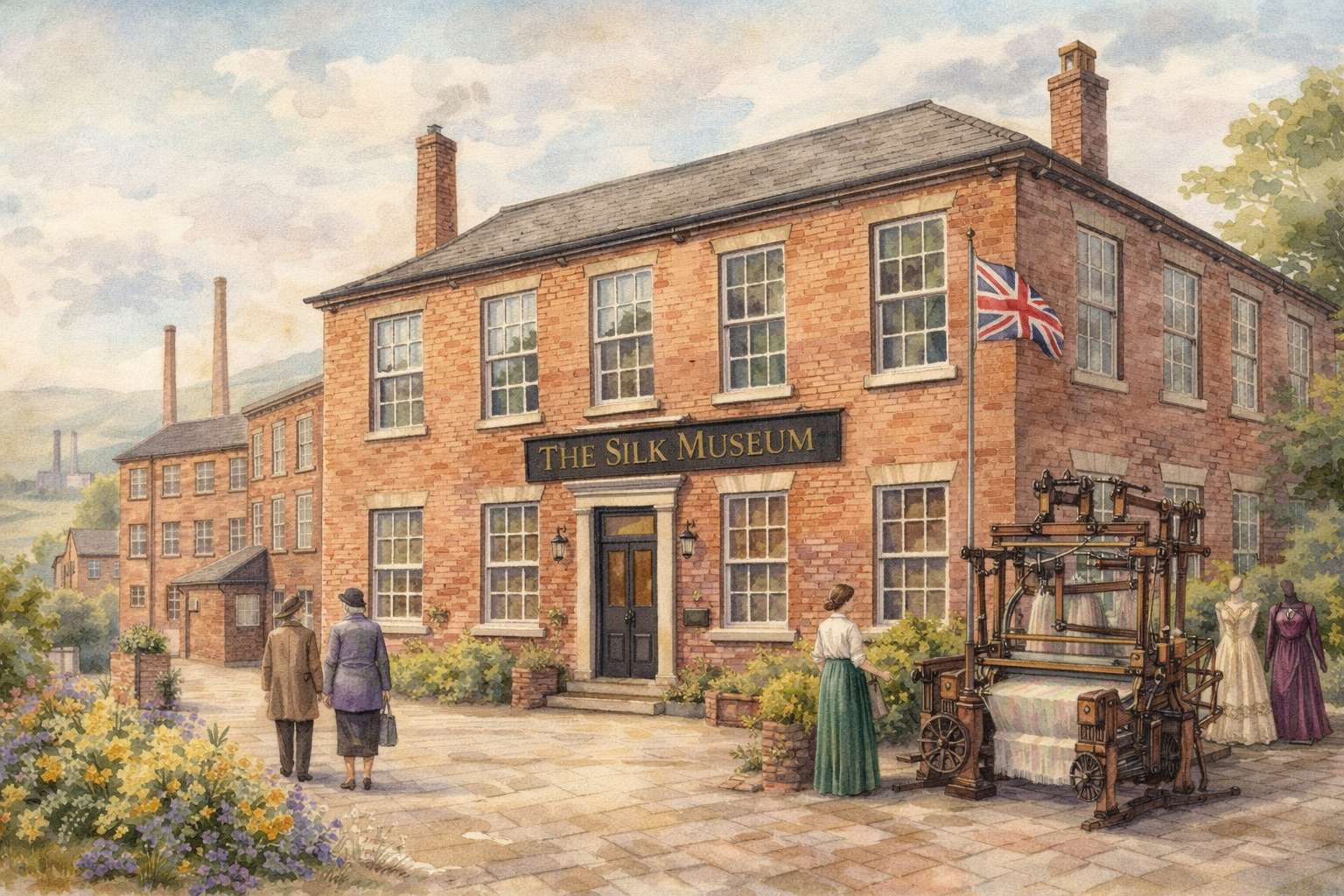
A living archive of craft, industry and cultural memory
There are museums that preserve objects, and then there are museums that preserve understanding. The Silk Museum in Macclesfield belongs firmly to the second category. It is not simply a place to look at beautiful fabrics behind glass. It is a place that explains how silk shaped a town, how a global luxury material became a local industry, and how craft, commerce and culture quietly braided themselves together in northern England.
Set within the former Paradise Mill complex, the museum tells a story that stretches far beyond looms and threads. It is a story about ingenuity, patience and ambition. It is about a town that learned to speak the language of silk fluently enough to become its most articulate British voice. For anyone interested in fashion, art, heritage or brand storytelling, the Silk Museum offers a masterclass in how material culture becomes meaning.
From global fibre to local identity
Silk arrived in Britain as an imported luxury long before it became an industry. For centuries it was a material associated with distance and privilege, carried along trade routes from Asia and southern Europe. What makes Macclesfield exceptional is how decisively it translated that foreign fibre into a local identity.
The museum carefully charts this transformation. Visitors are guided from the early dependence on imported silk yarns through to the rise of domestic weaving and finishing. Macclesfield’s geography mattered. Clean water, a damp climate that suited silk threads, and proximity to transport routes created the right conditions. But geography alone does not explain the scale of what followed. That credit belongs to skilled labour, entrepreneurial confidence and an unusually deep respect for technical mastery.
This is one of the museum’s quiet strengths. It does not romanticise industrialisation, nor does it flatten it into nostalgia. Instead, it explains how skill accumulates. How one generation of throwsters, weavers and designers passed knowledge to the next. How specialisation created reputation. And how reputation, once established, became a commercial asset.
Paradise Mill and the poetry of machinery
At the heart of the Silk Museum experience sits Paradise Mill, one of the best-preserved silk throwing mills in the world. This is not a static exhibit. The machinery remains capable of operation, and when it runs, it transforms abstract history into sensory reality.
The sound of the throwing frames, the rhythmic insistence of rotating spindles, the sense of scale within the mill floor all communicate something that text panels never could. Silk, often imagined as soft and ethereal, is revealed here as demanding and exacting. The machines require constant attention. The process tolerates no shortcuts.
From a branding perspective, this is instructive. Luxury materials are often presented as effortless. The Silk Museum restores the truth. Silk’s value lies in its difficulty. Its beauty is inseparable from labour, precision and time. This is a lesson modern fashion brands frequently attempt to communicate through campaigns and craftsmanship narratives. Here, it is simply demonstrated.
Design, pattern and the language of taste
Beyond production, the museum explores how silk functioned as a design medium. Pattern books, sample lengths and finished textiles reveal how Macclesfield responded to changing tastes across centuries. Florals, geometrics, paisleys and figurative motifs appear and reappear, adapted for different markets and social moments.
What emerges is an understanding of silk not just as fabric, but as visual language. Designers working in Macclesfield were not isolated artisans. They were acutely aware of fashion movements, political symbolism and international demand. Their work translated abstract trends into tangible form.
This aspect of the museum speaks directly to contemporary creative practice. Pattern is never neutral. It carries meaning, status and intention. By placing historical designs alongside contextual explanation, the Silk Museum shows how commercial success often depended on cultural literacy. Knowing what people wanted to wear was as important as knowing how to weave it.
Labour, lives and the human cost of beauty
An honest heritage institution must account for people as much as products. The Silk Museum does this with care. It acknowledges the long hours, the physical strain and the gendered nature of silk labour. Women and children played significant roles in the mills, often under challenging conditions.
Rather than diminishing the industry’s achievements, this honesty deepens them. It reminds visitors that craftsmanship is a human endeavour. Every length of silk represents countless decisions, movements and moments of concentration. From an ethical standpoint, this transparency matters. It allows modern audiences to engage critically with luxury, rather than consuming it unthinkingly.
In an era when brands are increasingly scrutinised for supply chains and labour practices, the museum’s approach feels both responsible and relevant. It demonstrates that acknowledging complexity does not weaken a story. It strengthens trust.
The museum as brand asset and cultural anchor
Macclesfield’s identity remains closely tied to silk, even though large-scale production has ceased. The Silk Museum plays a crucial role in maintaining that connection. It functions as a cultural anchor, reinforcing the town’s place within Britain’s textile narrative.
From a marketing perspective, this is heritage working at its best. The museum does not attempt to reinvent silk for contemporary tastes. Instead, it preserves authority. It becomes a reference point. For designers, educators and luxury brands, it offers something increasingly rare: depth.
Heritage, when handled well, is not static. It is renewable. The Silk Museum achieves this by combining scholarship with accessibility. Exhibitions are informative without being intimidating. Interpretation is clear without being simplistic. This balance allows the institution to speak to specialists and general visitors alike.
Education, continuity and future relevance
A particularly compelling aspect of the Silk Museum is its commitment to education. Workshops, demonstrations and collaborative projects ensure that silk knowledge is not locked in the past. Techniques are explained, skills are shared, and curiosity is actively encouraged.
This focus on continuity matters. Craft traditions survive not because they are preserved, but because they are practiced. By keeping silk processes visible and intelligible, the museum helps ensure that expertise does not evaporate with industrial decline.
For the fashion industry, which often struggles with skill shortages and superficial engagement with heritage, this model offers inspiration. Authentic storytelling begins with genuine understanding. The Silk Museum provides that foundation.
Why the Silk Museum still matters
In a world saturated with fast content and disposable aesthetics, the Silk Museum offers something quietly radical. It asks visitors to slow down. To observe. To appreciate how much effort sits behind even the lightest fabric.
It also reminds us that British luxury did not emerge fully formed. It was built, patiently, by towns like Macclesfield. By people who mastered materials, refined processes and developed taste over generations.
The museum’s greatest achievement may be its refusal to separate beauty from industry. It shows that elegance is not an accident. It is the result of systems, skills and sustained care. For anyone serious about fashion, art or cultural branding, this is not just interesting. It is essential.
Silk as story, not surface
The Silk Museum stands as more than a repository of objects. It is a narrative engine. It explains how silk became British, how industry shaped identity, and how craft continues to inform contemporary values.
By grounding luxury in labour and design in discipline, it offers a richer way to understand fashion’s past and future. In doing so, it elevates silk from surface decoration to cultural statement. That is why the Silk Museum matters, and why its story deserves to be told with care, confidence and depth.