
Whitchurch Silk Mill: A Living Case Study in Craft, Continuity and Brand Meaning
How Britain’s Oldest Working Silk Mill Became a Masterclass in Heritage, Craft and Modern Relevance
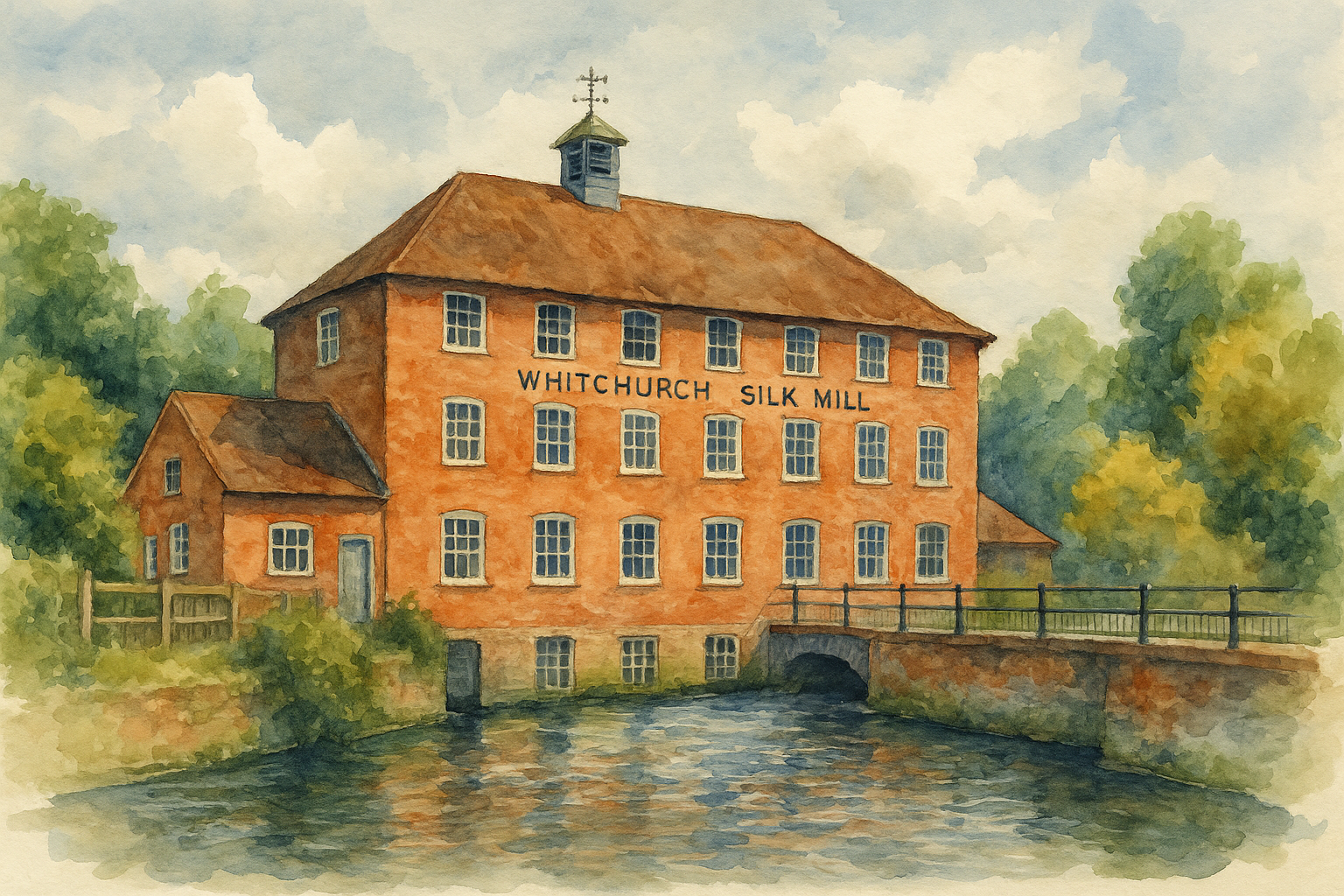
There are heritage sites that feel sealed behind glass, admired but inert. Then there are places like Whitchurch Silk Mill, which hums with a quieter, deeper energy. Here, history is not simply displayed. It is worked, maintained, argued over, repaired and, crucially, kept alive. This mill, set beside the River Test in Hampshire, is widely recognised as the oldest working silk mill in Britain. That distinction alone is impressive, but it barely scratches the surface of why Whitchurch matters.
From a branding and cultural perspective, Whitchurch Silk Mill functions as a rare case study in how authenticity is not constructed, but earned. It demonstrates how craft, place and continuity can form a narrative more powerful than any marketing campaign. In an era obsessed with scale, speed and digital abstraction, the mill offers something far more enduring: proof that value accumulates slowly, through knowledge passed hand to hand, generation to generation.
This article explores Whitchurch Silk Mill as a living institution. We examine its history, its technical craft, its relationship to landscape, and the way it communicates meaning without ever appearing to try. Along the way, it becomes clear that Whitchurch is not merely preserving silk production. It is preserving the philosophy of making.
A Mill Shaped by Water, Time and Necessity
The story of Whitchurch Silk Mill begins with water. Long before electricity, the River Test provided a steady, controllable power source. The mill’s earliest structures date back to the early nineteenth century, built to harness the river’s flow through waterwheels and later turbines. This was not an ornamental decision. It was a practical response to geography, and it embedded the mill firmly into its environment from the outset.
Originally used for other forms of milling, the site transitioned into silk production as Britain’s textile industry diversified. Silk, unlike wool or cotton, demanded precision. Temperature, humidity and consistent mechanical motion all mattered. Whitchurch’s riverside location, combined with robust engineering, made it unusually well suited to this work.
Over time, the mill developed a specialism in silk throwing. This process involves twisting raw silk filaments into strong, uniform yarn suitable for weaving. It is a highly technical craft, one that requires both mechanical understanding and tactile sensitivity. Unlike weaving, which often receives more public attention, silk throwing sits quietly at the heart of textile quality. Without it, nothing that follows can succeed.
What is striking is how little the mill chased novelty. Instead, it refined what it already did well. Machines were adapted rather than replaced. Processes evolved incrementally. This slow progression is one reason the mill survived while so many others vanished.
The Craft of Silk Throwing Explained
To understand Whitchurch Silk Mill is to understand silk throwing itself. Raw silk arrives as fine filaments reeled from cocoons. These filaments are delicate, inconsistent and unsuitable for direct use. Silk throwing transforms them into yarn by twisting multiple strands together under controlled tension.
At Whitchurch, historic throwing machines still perform this task. They stretch across the mill floor, long and rhythmic, driven by water power. Operators monitor tension, twist and alignment, making constant micro-adjustments. This is not automated perfection. It is skilled supervision.
The result is silk yarn with specific characteristics: strength, elasticity and a subtle, living irregularity that modern industrial processes often erase. From a luxury perspective, this matters. These qualities influence how silk behaves when woven, how it reflects light, and how it ages over time.
From a branding standpoint, the process tells a deeper story. The mill does not simply produce material. It produces provenance. Each length of yarn carries with it the trace of place, method and human judgement.
Survival Against the Odds
The British silk industry faced severe decline in the twentieth century. Globalisation, cheaper labour markets and synthetic fibres all took their toll. Mills closed, machinery was scrapped, skills were lost. Whitchurch came perilously close to this fate.
Its survival was not guaranteed by profitability alone. Instead, it was saved by recognition of its cultural value. The mill transitioned from purely industrial production to a hybrid role that combined working manufacture with education and conservation.
This shift is critical to understanding Whitchurch’s modern identity. Rather than becoming a static museum, it remained operational. Machines were restored to working condition. Skills were documented and taught. Visitors were invited not just to observe, but to understand.
This approach reflects a sophisticated understanding of audience engagement. People do not connect deeply with objects alone. They connect with process, with effort, with the visible traces of human involvement. Whitchurch leaned into this instinct long before experiential branding became fashionable.
The Power of Place and Material Truth
One of Whitchurch Silk Mill’s greatest assets is its refusal to separate product from context. The river is not hidden. The machinery is not sanitised. The building creaks, breathes and bears its age honestly.
In branding terms, this is radical transparency. There is no attempt to smooth away complexity or contradiction. Oil stains coexist with beauty. Noise accompanies elegance. This honesty builds trust, because it feels unmediated.
For modern luxury brands obsessed with storytelling, Whitchurch offers a powerful lesson. Authentic narratives are not written after the fact. They emerge naturally when craft is respected and allowed to remain visible.
Education, Interpretation and Modern Relevance
Today, Whitchurch Silk Mill operates as an educational resource as much as a production site. Demonstrations, workshops and interpretation materials explain not just how silk is made, but why it matters.
This educational role extends the mill’s relevance beyond nostalgia. It positions Whitchurch as a steward of knowledge at a time when manual skills are increasingly rare. The mill becomes a reference point for designers, historians and makers seeking deeper understanding of material origins.
From a content perspective, this layered offering is remarkably strong. The mill speaks simultaneously to families, specialists and professionals. Each audience finds a different entry point, yet the core message remains consistent: quality is the result of care, patience and accumulated expertise.
A Case Study in Heritage Branding
If Whitchurch Silk Mill were a commercial brand, it would be considered extraordinarily disciplined. Its identity is coherent across touchpoints. Its values are embodied rather than declared. Its story is specific, not generic.
The mill demonstrates that heritage is not about age alone. It is about continuity of intent. Machines are still used for their original purpose. Skills are still practiced rather than merely described. The past informs the present without trapping it.
In a market saturated with invented histories and surface-level craft claims, Whitchurch stands apart by doing less and meaning more. It does not scale aggressively. It does not chase trends. Instead, it deepens.
Conclusion
Whitchurch Silk Mill endures because it understands something fundamental. Craft is not a relic. It is a living system that requires use to survive. By keeping silk throwing alive, by maintaining water-powered machinery, and by inviting the public into this process, the mill has achieved something rare.
It has remained relevant without reinventing itself. It has become educational without losing rigour. It has become a symbol without becoming abstract.
For anyone interested in branding, material culture or the future of making, Whitchurch Silk Mill offers a clear, compelling lesson. Authentic value is built slowly. It is sustained through care. And when done well, it needs very little explanation at all.