
How to Tie the Classic Neck Knot: A Timeless British Look
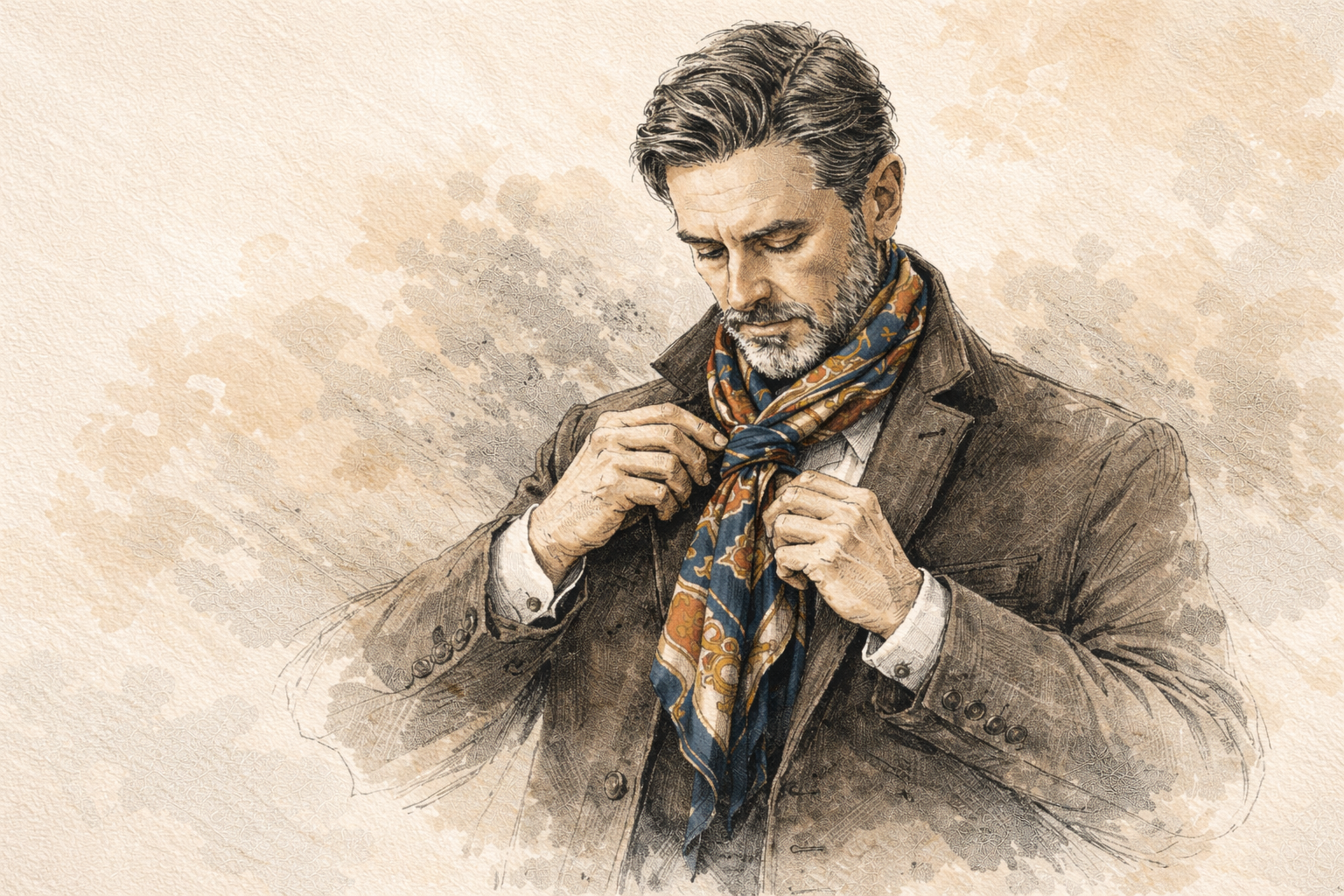
An enduring gesture of British elegance, where technique, culture and quiet confidence meet
There are few acts in menswear as deceptively simple, and as culturally loaded, as tying a neck scarf. In Britain, the classic neck knot occupies a curious position. It is neither flashy nor theatrical, neither trend-led nor nostalgic for its own sake. Instead, it sits comfortably in the long continuum of British dress, where restraint is prized, personal expression is subtle, and good taste is often revealed through what is not overdone.
To tie a scarf well is not merely a practical exercise. It is an act of judgement. Of balance. Of knowing when to stop. The classic neck knot, sometimes referred to as the simple drape-and-tuck, remains the most enduring expression of this philosophy. Understated, adaptable, and quietly confident, it has survived centuries of shifting fashion without losing its relevance.
This article explores not only how to tie the classic neck knot properly, but why it matters. From its historical roots and cultural significance to its branding power in modern luxury, this is a knot that carries far more meaning than its simplicity suggests.
A brief cultural history of the British neck scarf
Scarves have been worn in Britain since at least the seventeenth century, initially as practical garments rather than decorative ones. Soldiers, labourers, and travellers relied on wool and silk neckwear for warmth and protection from the elements. Over time, as Britain’s class structures and dress codes formalised, the scarf began to take on more symbolic weight.
By the nineteenth century, silk neckwear had become associated with refinement and leisure. Gentlemen travelling by rail or carriage adopted scarves as a softer alternative to rigid cravats. Unlike neckties, scarves suggested ease. They implied that the wearer had time, space, and freedom. This association has endured. Even today, a scarf worn well signals a life not entirely dictated by urgency.
The classic neck knot evolved naturally from this context. It did not require a mirror, nor a diagram. It could be tied on the move, adjusted instinctively, and undone without ceremony. In many ways, it reflects the British preference for clothes that work hard without calling attention to themselves.
What defines the classic neck knot
Before addressing technique, it is worth defining what the classic neck knot is, and crucially, what it is not.
It is not tightly cinched. It does not sit rigidly against the throat. It does not aim for symmetry at all costs. The classic knot allows the scarf to rest naturally, with a gentle fold at the front and a discreet tuck beneath a coat or jacket.
At its best, it appears almost accidental, though of course it is anything but. The elegance lies in its restraint.
Key characteristics include:
A soft, central fold rather than a hard knot
Ends that are concealed or partially concealed
A relaxed line that follows the natural shape of the body
Minimal bulk at the neck
This knot works particularly well with silk, fine wool, and lightweight cashmere. Heavier scarves demand more structure and often benefit from alternative knots.
How to tie the classic neck knot, step by step
The technique itself is refreshingly straightforward, though small details make a significant difference.
Begin by folding the scarf lengthways, loosely, so that it forms a soft band rather than a crisp line. Drape it around the neck, allowing one end to hang slightly longer than the other. There is no exact measurement here. Trust your eye.
Take the longer end and bring it across the front of the neck, passing it gently around once. Do not pull tight. The fabric should skim the collarbone rather than grip it.
Now, tuck the longer end down behind the loop you have just created, allowing it to disappear beneath the scarf and into the neckline of your coat or jacket. Adjust lightly. The front fold should sit just below the hollow of the throat.
That is all. If it feels overworked, it probably is. The knot should settle naturally after a few minutes of wear.
Common mistakes and how to avoid them
Despite its simplicity, the classic neck knot is often undermined by overthinking. The most common errors stem from an understandable desire for control.
One frequent mistake is pulling the scarf too tight. This transforms a relaxed knot into something more rigid, edging it closer to a formal necktie. Remember, the scarf is meant to soften an outfit, not sharpen it.
Another is excessive symmetry. While balance matters, perfect alignment rarely looks natural. A slight irregularity gives the knot life.
Finally, choosing the wrong fabric can undo even the best technique. Very thick scarves bunch uncomfortably at the neck, while overly slippery silks can collapse. Aim for fabrics with a little body and texture.
The classic neck knot as a marker of personal style
From a branding and image perspective, the classic neck knot communicates a great deal about the wearer. It suggests confidence without bravado. Knowledge without pedantry. It is favoured by those who understand tradition but are not enslaved by it.
In professional contexts, particularly within creative industries, it has become a subtle signal of authority that does not rely on formality. A well-cut coat, an open collar, and a neatly tied scarf can speak more eloquently than a tie ever could.
Luxury brands have long understood this. In campaign imagery, the classic knot is often used to convey effortlessness and authenticity. It avoids the stiffness of over-styling while still appearing intentional. This balance is particularly appealing to modern consumers who value craft and heritage but resist overt displays of status.
Material matters, why silk changes everything
While the knot can be tied with various fabrics, silk occupies a special place in British scarf culture. Lightweight, breathable, and subtly lustrous, silk responds beautifully to the gentle folds of the classic knot.
High-quality silk, particularly in heavier momme weights, holds its shape without stiffness. It allows the knot to evolve throughout the day, developing character rather than collapsing. From a tactile standpoint, silk also sits comfortably against the skin, an important consideration for all-day wear.
Pattern and colour play a role here too. The classic knot works best when the scarf itself carries visual interest. Heritage motifs, restrained florals, and painterly designs benefit from the partial reveal that this knot provides. It offers just enough exposure to intrigue without overwhelming the outfit.
Seasonal adaptability and modern relevance
One of the reasons the classic neck knot has endured is its adaptability. In spring and autumn, it offers light warmth and visual texture. In winter, it layers easily beneath coats without adding bulk. In cooler summer evenings, a silk scarf tied in this way provides a touch of elegance without discomfort.
Modern styling has further expanded its relevance. Worn with tailoring, it softens formality. Paired with knitwear, it adds refinement. Even with casual outerwear, it introduces a note of deliberateness that elevates the whole look.
This versatility makes the knot particularly valuable for those building a considered wardrobe rather than a trend-driven one.
Why timeless techniques still matter
In an era dominated by fast fashion and constant novelty, there is something quietly radical about mastering a simple, time-tested technique. The classic neck knot asks very little of the wearer, yet offers lasting returns. It does not announce itself. It endures.
For brands rooted in heritage and craft, teaching such techniques is more than a service. It is an extension of their values. It reinforces the idea that luxury lies not in excess, but in understanding. That true style is cumulative, built slowly through knowledge and practice.
A final word on confidence and restraint
Tying the classic neck knot is ultimately an exercise in restraint. It rewards those who trust their instincts and resist the urge to over-style. Like much of British dress, its power lies in suggestion rather than declaration.
Once learned, it becomes second nature. A small, repeatable act that connects the present moment to a long tradition of thoughtful dressing. In that sense, the knot is not merely a technique, but a quiet statement of continuity, care, and confidence.