
The silk scarf houses · The botanical eye
Gucci silk scarves
Flora rewards a close look. The buying decision begins when the flowers meet the clothes already in your wardrobe.
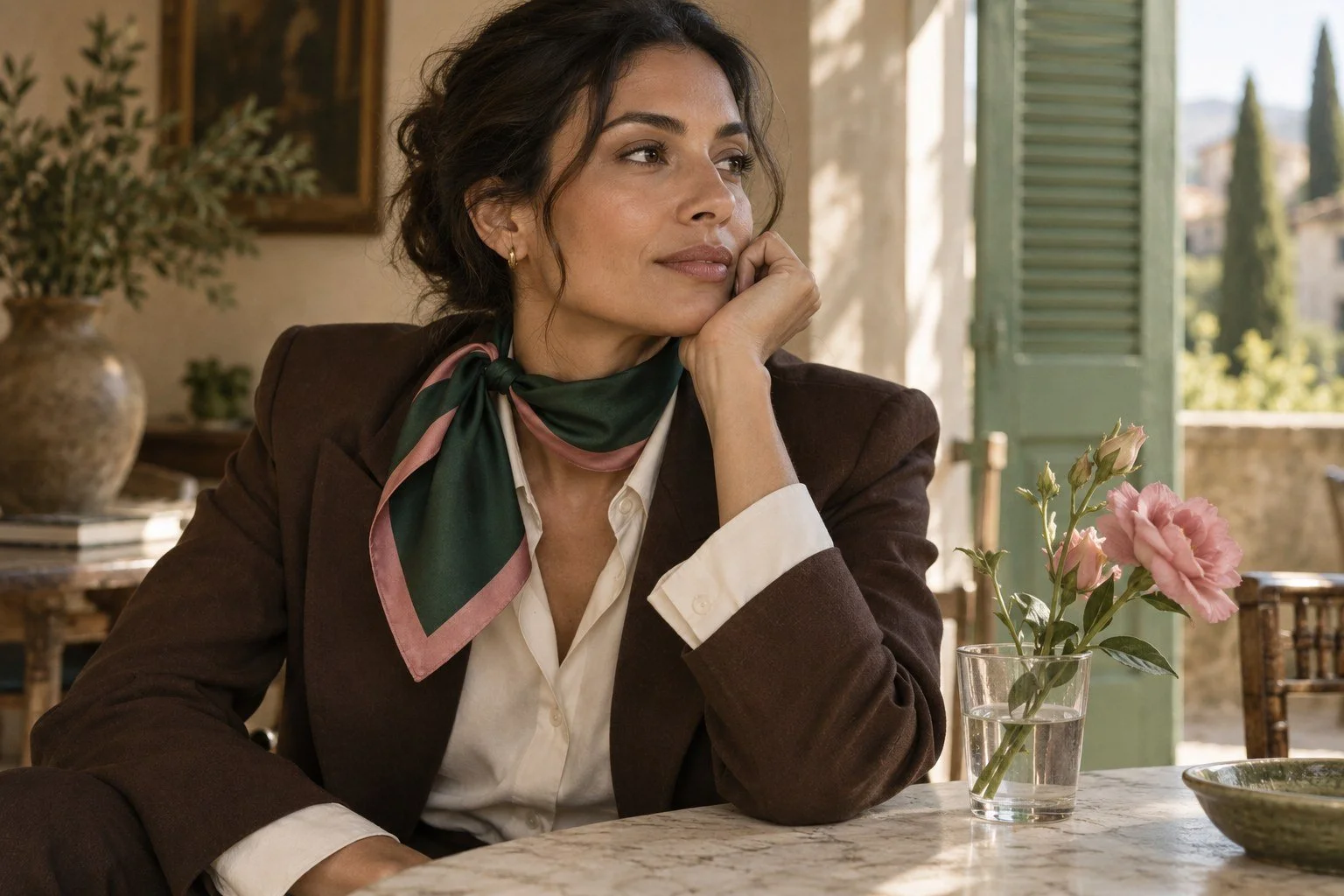
Flowers can be surprisingly decisive. Set against a dark jacket, a small passage of green or rose changes the whole temperature of the clothes. With Gucci silk scarves, that relationship between botanical detail and the everyday wardrobe is a more interesting starting point than a general promise of glamour. The pleasure is in choosing exactly how much of the garden to reveal.
Why Flora matters
Gucci’s account of The Art of Silk identifies Flora as a design created in 1966 by Vittorio Accornero de Testa. The house’s silk project also looks at other motifs and artistic interpretations, placing the scarf within a larger graphic vocabulary. Flora provides an important reference, but it should not be used as a catch-all name for every Gucci floral scarf. Check the actual design title and description.Gucci: The Art of Silk
The distinction matters when browsing earlier pieces as well as new collections. A botanical print, an artist collaboration and a monogram composition can have very different visual rhythms. Before asking which is the most recognisable, ask which gives you something to look at. There should be a particular detail you want to return to: a fine line, a colour combination or the way the border encloses the drawing.
The floral scarf without a floral outfit
Our preferred way into a richly illustrated scarf is through plain clothes with some weight of their own. Chocolate tailoring, a white shirt or a simple navy knit provides a clear setting for small passages of colour. The scarf need not match the clothes exactly. One shared tone can be enough to make the combination feel intentional.
If the print is dense, compare it at three distances: open on a surface, folded at the neck and viewed from across a room. Close up, the drawing may be exquisite. At a distance, the dominant colour is what survives. Both views belong to the purchase. Online, use the full-square image and the worn image together; neither tells the whole story alone.
How much print do you want to wear?
A larger square gives the composition room to unfold and provides more cloth for a broad band or triangular fold. A smaller format offers a compact colour accent. The same motif can feel markedly different at another scale, so compare the stated measurements rather than relying on an image crop. Read the exact fibre composition and finish on each listing, too. Do not assume that every item in a scarf category is pure silk.
Choosing a gift with a point of view
Think about the recipient’s appetite for pattern. Someone who wears quiet tailoring may welcome a single animated detail; someone who mixes prints confidently might prefer a scarf with a strong border to give the combination structure. A gift becomes more considered when you can explain why that particular palette belongs to that particular person.
Keep the product reference and purchase record, and check the seller’s exchange arrangements before choosing a colour on someone else’s behalf. For an earlier design, request clear images of the full scarf, both faces, the edges and any marks. A familiar motif does not by itself establish authenticity or condition.
The editorial choice
We would start with a botanical composition whose darkest tone works with an existing jacket, then let one lighter colour sit close to the face. Fold it with enough looseness for fragments of the drawing to appear. The result should feel personal rather than meticulously arranged: a little colour carried into an otherwise ordinary day.