
How to Style a Scarf in Autumn: 7 Outfit Ideas to Try
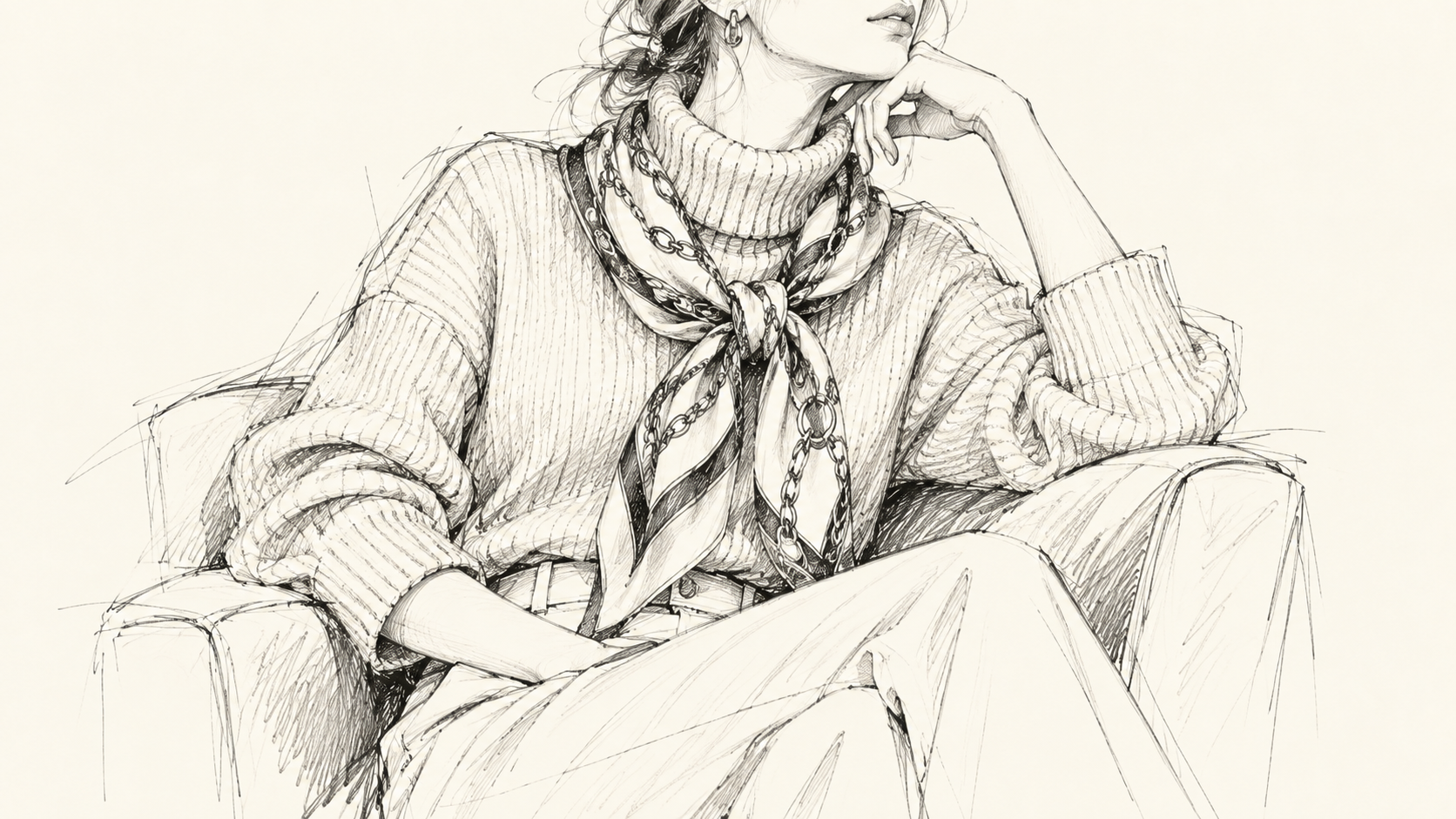
The easiest way to style a scarf in autumn is to use it as the layer that connects lighter summer clothes with the heavier pieces beginning to return to your wardrobe. In early autumn, a silk square can sit beneath a blazer, trench coat or lightweight jacket without adding unnecessary warmth, while later in the season the same principle can be applied with larger wool, cashmere or blended scarves over knitwear and coats. The most successful combinations usually balance the size and weight of the scarf with the clothes underneath it, allowing colour, print and texture to become part of the outfit rather than treating the scarf simply as something practical to put on when the temperature drops.
That versatility is what makes autumn particularly good for scarves. Dressing at this time of year is rarely about one fixed type of weather, particularly in the UK, where a cool morning can become a mild afternoon before temperatures fall again in the evening. Scarves respond to that uncertainty better than almost any other accessory because they can be tied, loosened, removed or carried without changing the basic outfit, while a scarf chosen for its colour or print can also make familiar coats, jackets and knitwear feel completely different from one day to the next.
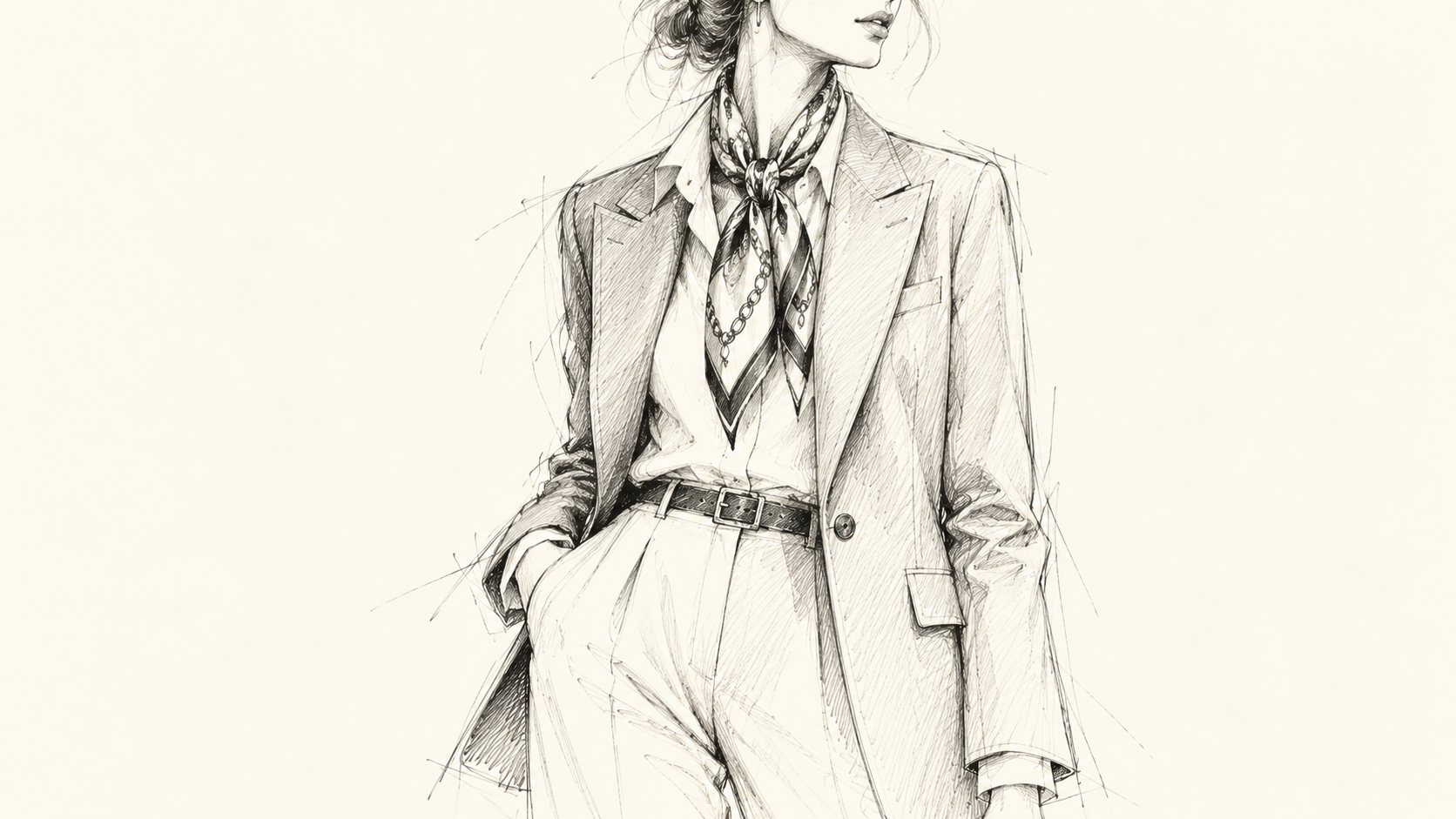
1. Wear a silk scarf beneath a blazer
A silk scarf worn beneath a blazer is one of the easiest ways to introduce a scarf into an early-autumn wardrobe because it adds colour and movement without creating too much volume around the neck. A square scarf can be folded diagonally and then rolled into a narrower band before being tied at the front or slightly to one side, leaving the ends relatively short so that the scarf sits comfortably within the shape of the jacket. Alternatively, a larger square can be folded into a triangle and allowed to sit more loosely beneath the lapels, where part of the print becomes visible in much the same way as the front of a patterned blouse.
The key is to allow the structure of the blazer to frame the scarf rather than overwhelm it. A slim silk scarf works particularly well with a crew-neck jumper, fine roll neck or open-collar shirt, while a larger square can add interest to otherwise simple tailoring in navy, grey, brown, black or camel. There is no need to match the scarf precisely to the jacket, and in many cases the outfit feels more considered when one tone in the print loosely connects with another colour elsewhere while the remaining shades provide contrast. A burgundy, cream and green scarf, for example, can work beautifully with a chocolate-brown blazer even if the exact shade of brown does not appear anywhere in the design.
2. Tie a scarf over autumn knitwear
Knitwear provides an ideal background for a scarf because the difference in texture immediately makes both fabrics more noticeable. A silk square tied close to the neck over a crew-neck jumper creates a clean, compact focal point, while a larger scarf can be folded more loosely and allowed to fall across the chest over a cardigan or fine knit. The smoother surface of silk provides a particularly effective contrast to wool and cashmere, preventing an autumn outfit from becoming visually heavy while introducing a degree of movement that knitted fabrics do not naturally have.
Proportion matters more here than complexity. A heavy or oversized scarf wrapped repeatedly around a chunky jumper can quickly create too much volume, whereas a lighter silk or fine wool scarf will sit more naturally against thick knitwear. If the jumper itself is fine, a larger scarf can comfortably carry more of the visual weight, particularly when worn in a relaxed triangle or folded into a broad band around the shoulders. Rather than thinking about the scarf and knitwear as separate pieces, it helps to treat them as two layers within the same composition, with one providing texture and the other introducing colour, line or pattern.
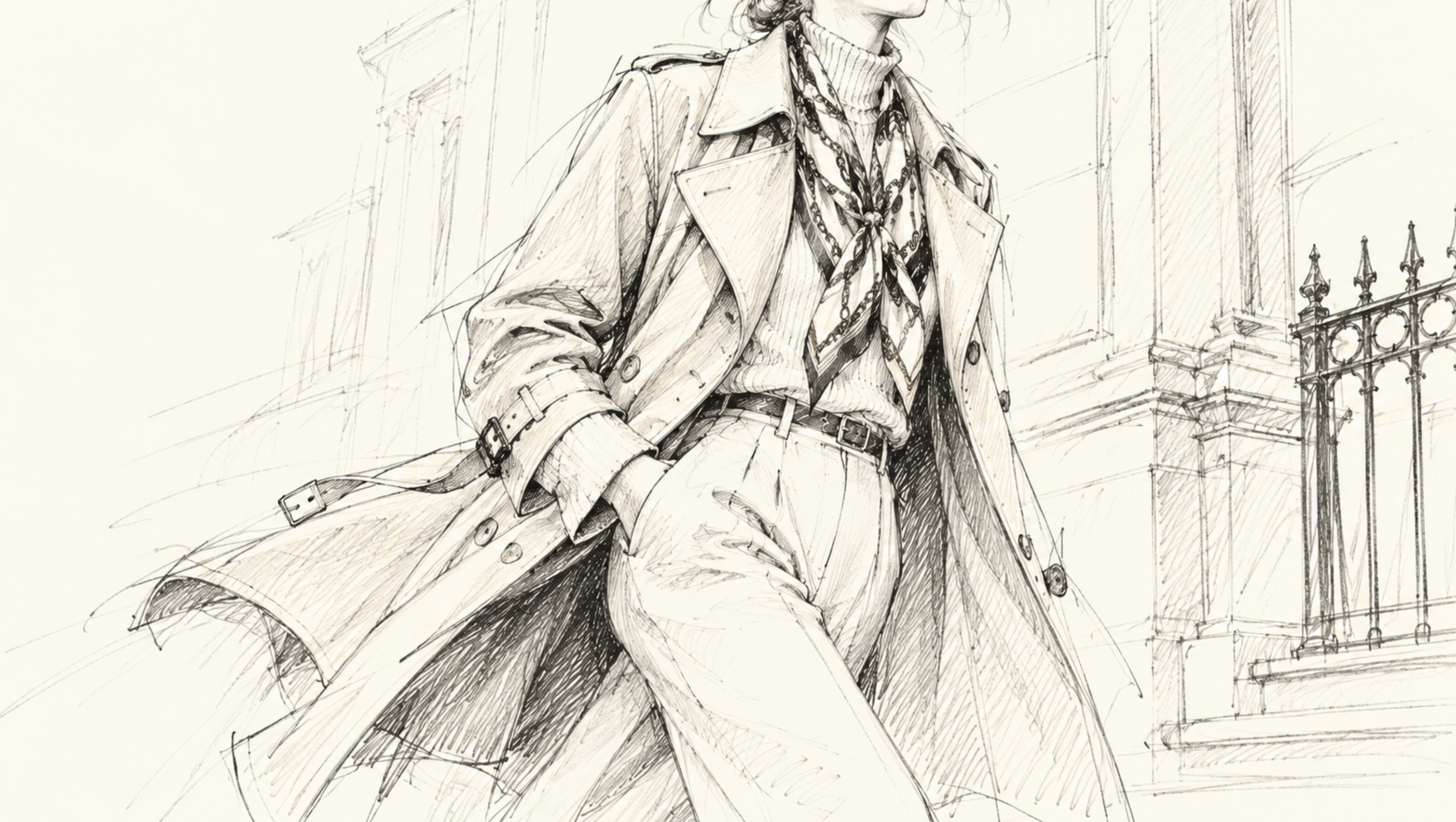
3. Style a scarf with a trench coat
A trench coat and scarf make a particularly natural autumn combination because both are designed for transitional weather, and the clean structure of the coat gives the scarf several different ways to sit. For a neater look, a silk scarf can be tied closely around the neck and worn inside the collar, leaving only the knot and a small section of print visible. A larger square can be folded diagonally and tucked beneath the lapels so that the centre of the design appears across the chest, while a long scarf can be draped once around the neck and allowed to fall vertically inside the open coat.
This is also one of the easiest ways to bring colour into a neutral autumn wardrobe. Beige, stone, navy and khaki trenches provide a relatively quiet backdrop, which means a patterned scarf can carry considerably more detail without making the outfit feel busy. If the coat is already strongly coloured or patterned, a simpler scarf can provide balance instead. What matters is that the scarf remains connected to the lines of the coat, rather than being wrapped so heavily around the neck that it competes with the collar, epaulettes and lapels already built into the garment.
4. Wear a scarf with a wool coat without adding bulk
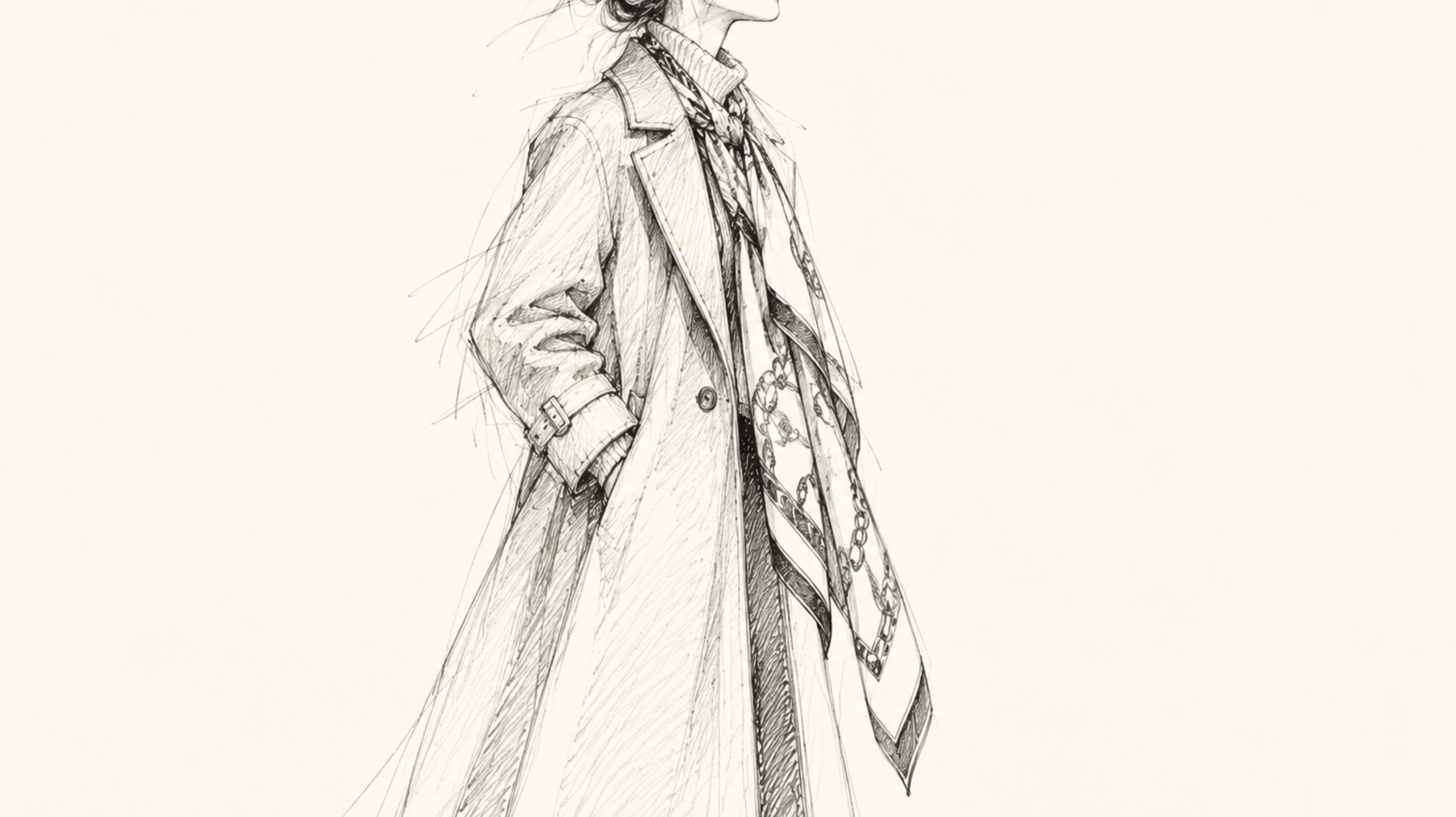
As autumn moves towards colder weather, the scarf becomes more practical as well as decorative, but this does not mean it needs to become oversized or heavily wrapped. With a structured wool coat, a long wool or cashmere scarf can simply be placed around the neck with both ends hanging vertically, creating a clean line through the front of the coat, while a single loose wrap adds warmth without obscuring the shape of the outerwear. A silk square can also continue to work beneath the collar of a wool coat, particularly on days when the coat itself provides enough warmth and the scarf is being used primarily for colour and detail.
The easiest way to avoid bulk is to consider both fabric weight and the shape of the coat before tying the scarf. A large blanket scarf may work beautifully with a relatively minimal coat because there is enough visual space to accommodate it, while a coat with a large collar, oversized lapels or significant texture often benefits from something finer and more restrained. It is also worth resisting the instinct to wrap a long scarf repeatedly simply because there is excess fabric, since allowing part of it to hang naturally often creates a more elegant shape and prevents the upper half of the outfit from becoming disproportionately heavy.
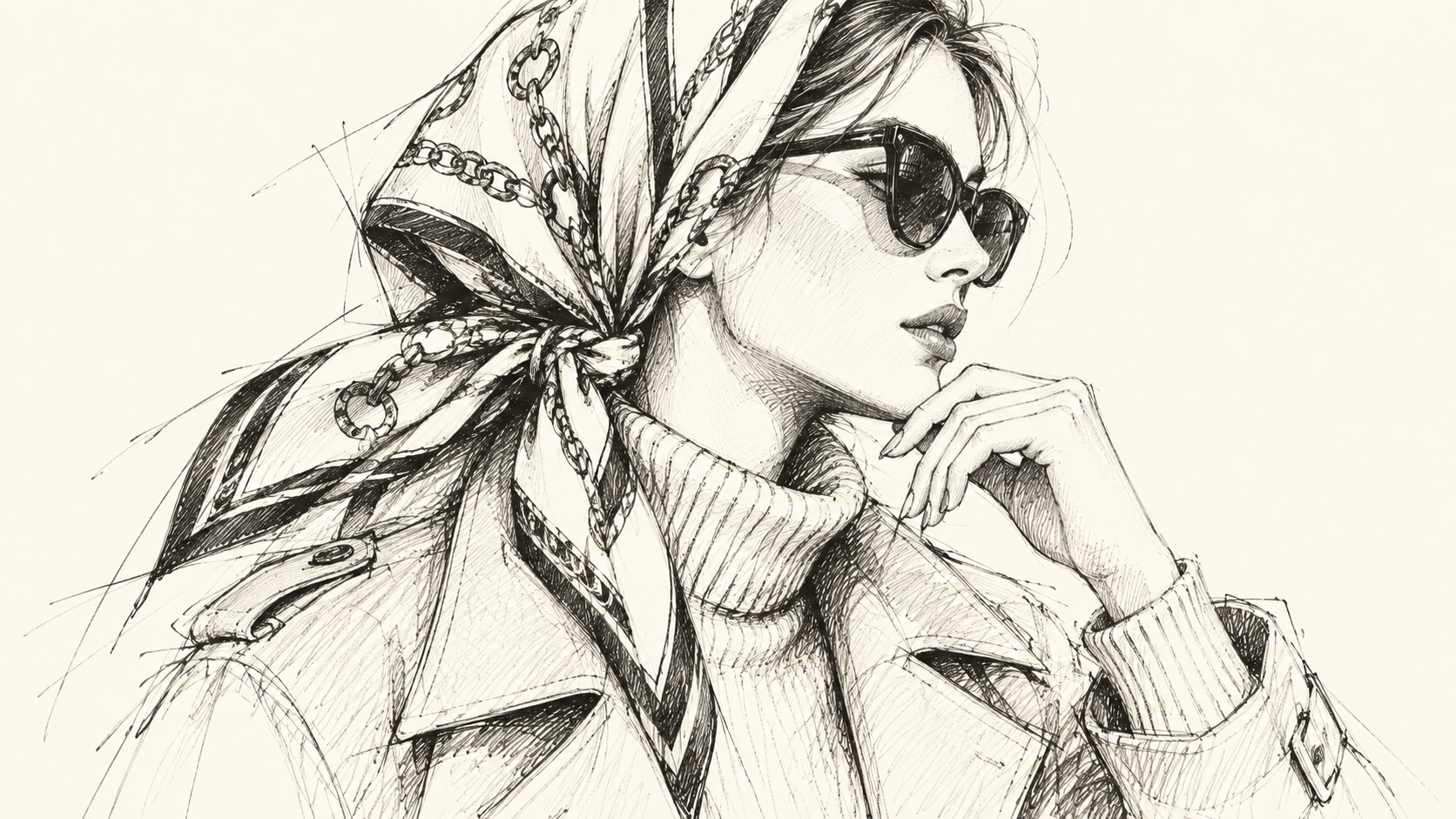
5. Wear a square scarf as a headscarf
The headscarf has returned as one of the more visible ways of wearing a square scarf, but autumn arguably makes the styling more useful than it is during high summer because it can provide light protection from wind while still feeling considerably less substantial than a knitted hat. A medium or large square can be folded diagonally, placed over the head and tied either beneath the chin or at the nape of the neck, while a smaller scarf can be rolled into a band and used more like a headband around the hair.
What makes the look feel contemporary is largely what surrounds it. Worn with a trench coat, leather jacket, oversized blazer or simple knit, a printed headscarf can look graphic and intentional rather than nostalgic, particularly when the rest of the outfit remains relatively uncomplicated. The scarf itself does not necessarily need to match anything else closely, although repeating a small amount of colour from the coat, bag or knitwear can help anchor a more elaborate print within the overall look.
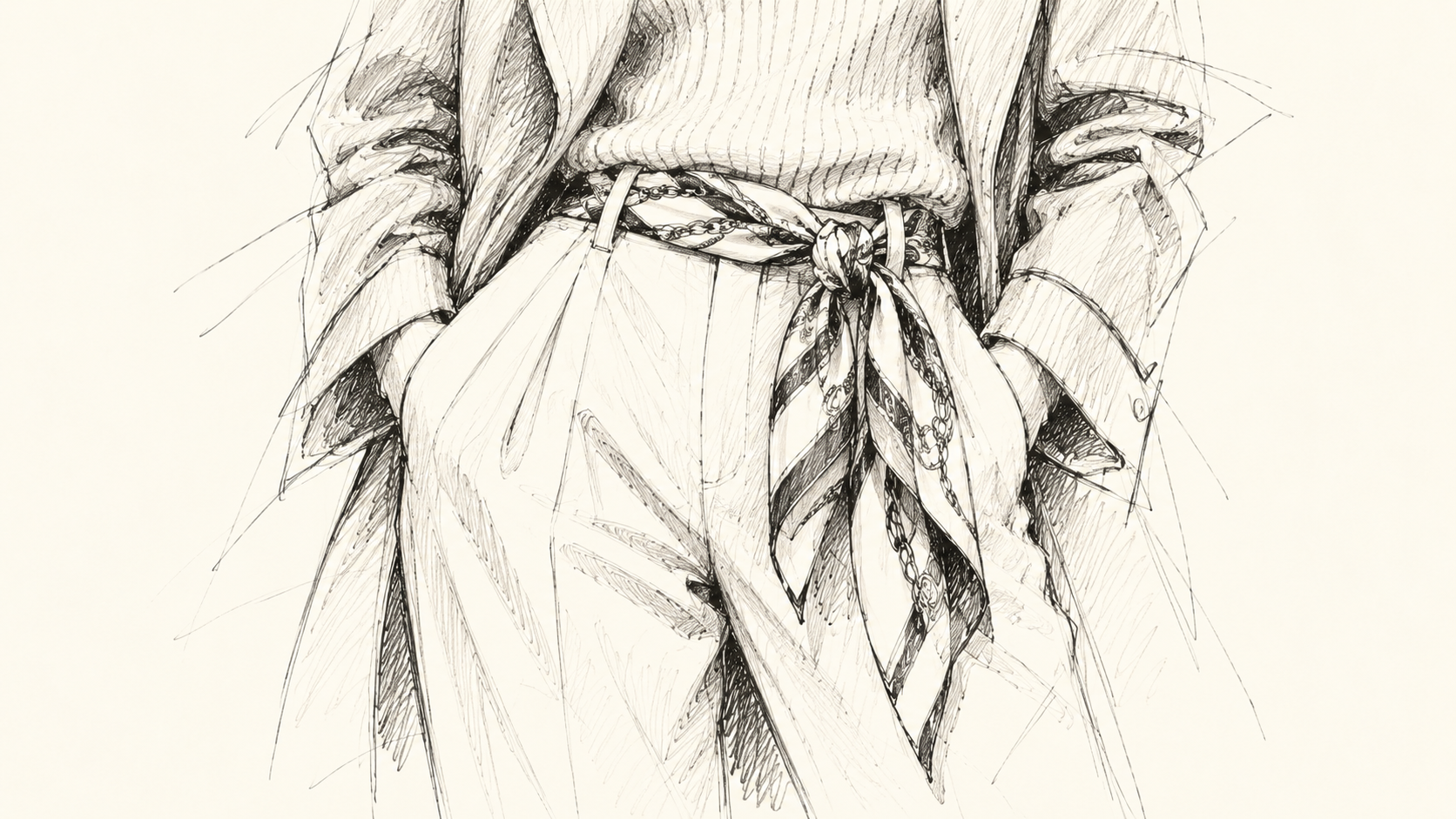
6. Use a scarf at the waist or belt loop
Moving the scarf away from the neck is one of the easiest ways to make a familiar piece feel different, and autumn outfits provide plenty of opportunities to wear one at the waist. A silk square can be folded into a long, narrow strip and threaded through the belt loops of jeans or trousers before being knotted slightly off-centre, where the movement of the silk creates a softer alternative to a conventional leather belt. With a skirt or high-waisted trousers, the same scarf can be tied directly around the waist, allowing a short section of the ends to fall naturally rather than forming a large bow.
A smaller scarf can achieve a similar effect when tied through a single belt loop, particularly with denim or tailored trousers, where only a small amount of pattern is needed to break up the solidity of the fabric. This works especially well in autumn because so much of the seasonal wardrobe relies on substantial materials such as denim, corduroy, leather and wool, making the contrast of silk particularly noticeable even when only a small section of the scarf is visible.
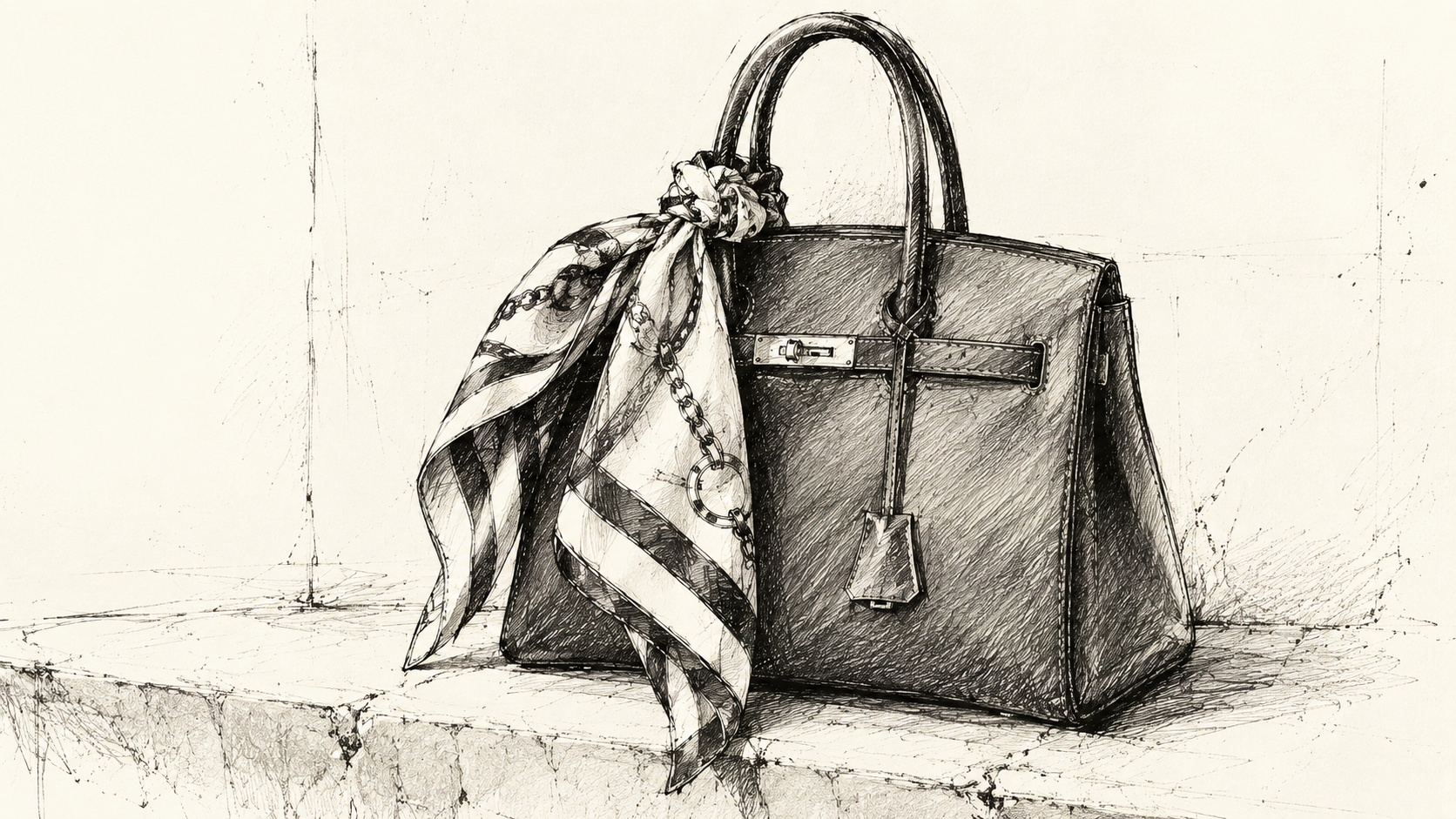
7. Tie a scarf to an autumn handbag
A scarf tied to a handbag is useful when the outfit itself already contains enough layers, or when a smaller scarf would otherwise feel difficult to incorporate around the neck. Folding it into a narrow strip and tying it around the base of a top handle introduces colour and movement without changing the silhouette of the clothes, while wrapping part of the handle more completely can transform the appearance of a familiar leather or suede bag.
Autumn bags are often made from visually heavier materials and darker colours, which makes a printed silk scarf particularly effective. Chocolate brown, oxblood, black, olive and dark tan bags can all be lifted by a scarf containing lighter or brighter tones, while a neutral silk square can soften a more colourful bag. There is also a practical advantage in keeping a scarf this way, because it remains available to move back onto the neck or hair if the temperature changes during the day.
What type of scarf is best for autumn?
There is no single scarf fabric that works throughout the whole season because early and late autumn can feel very different. Silk is particularly useful during the transitional period because it adds colour, pattern and some protection around the neck without the heat or volume of a winter scarf, making silk squares well suited to blazers, leather jackets and trench coats. As temperatures fall, fine wool, cashmere, silk-wool blends and larger woven scarves become more practical, particularly when worn with heavier outerwear.
Size is just as important as material. A smaller square works well tied closely around the neck or attached to a bag, while medium and larger squares offer more possibilities because they can also be draped beneath tailoring, tied over knitwear or worn over the head. Long rectangular scarves tend to work most naturally with coats, where they can hang vertically or be wrapped once without creating too much bulk. Rather than looking for one universal autumn scarf, it is more useful to choose a shape and fabric that complement the clothes you are already wearing.
What colour scarf should you wear in autumn?
Traditional autumn colours such as burgundy, rust, olive, chocolate, camel, navy and deep green work because they sit naturally alongside the heavier fabrics and darker outerwear that tend to return at this time of year, but there is no need to restrict a scarf to a conventional seasonal palette. In fact, because a scarf occupies a relatively small part of an outfit, it is one of the easiest places to introduce stronger colour, whether that means red against a camel coat, blue against chocolate knitwear or an intricate multicoloured print against otherwise monochrome tailoring.
One useful approach is to decide whether the scarf should harmonise with the outfit or interrupt it. A tonal scarf containing shades already present in the coat, jumper or trousers will create a quieter and more polished effect, while a scarf in a contrasting colour immediately becomes the focal point. Neither is inherently better, although combining too many unrelated colours can make the outfit feel accidental, so even a contrasting scarf usually benefits from some visual connection to the rest of the look through either tone, texture or pattern.
Should your scarf match your coat?
A scarf does not need to match a coat exactly, and in most cases an exact match can make the combination feel flatter than a more nuanced relationship between the two. Instead, the scarf can repeat one secondary tone from the coat or introduce a complementary colour, allowing the two pieces to feel connected without appearing as though they were sold as a set. A camel coat, for example, can work with navy, burgundy, cream, red or green scarves, while a black coat can support almost any colour provided the rest of the outfit gives the combination some context.
Pattern should also be considered. A plain coat can carry a much more elaborate scarf, whereas a checked, herringbone or patterned coat often works better with something calmer so that the two designs are not competing for attention. The strongest combinations tend to create a clear hierarchy, with either the scarf or the coat acting as the visual focus while the other provides the background.
How do you wear a scarf without looking bulky?
Bulk usually comes from using too much fabric in too small an area, particularly when a large scarf is wrapped several times around an already substantial jumper or coat. The simplest solution is to reduce the number of wraps and allow more of the scarf to fall vertically, which creates a longer visual line while keeping the neckline relatively clean. Folding a square before tying it also helps control the amount of fabric, while choosing silk, fine wool or cashmere rather than very thick woven materials can preserve warmth without creating unnecessary volume.
The shape of the neckline matters as well. A high roll neck already fills much of the space around the neck, so a scarf often looks better draped loosely rather than tied tightly above it, while an open coat or blazer provides more room for a scarf to sit inside the lapels. Thinking about that negative space makes more difference than mastering an elaborate knot, because the most convincing scarf styling often comes from allowing the fabric to fall naturally within the structure of the clothes.
Can you wear a silk scarf in autumn?
A silk scarf is particularly well suited to autumn because the season allows it to be combined with fabrics that create far greater textural contrast than summer clothes usually provide. Against wool, cashmere, leather, suede or denim, the smoothness and movement of silk becomes more noticeable, while the scarf can add colour and print without significantly increasing the warmth or bulk of the outfit.
The way it is worn can then change as the season develops. In early autumn, silk can sit directly over a shirt or beneath a lightweight blazer, before moving onto knitwear, leather and trench coats as temperatures fall, and finally beneath a heavier wool coat later in the season. This adaptability means a silk scarf does not need to be treated as a summer accessory that disappears once September arrives, since autumn arguably gives it more styling possibilities than any other part of the year.
The best autumn scarf styling starts with the outfit, not the knot
The most effective way to wear a scarf in autumn is not to begin by searching for the most complicated method of tying it, but by looking at what the rest of the outfit needs. A plain blazer may benefit from a compact silk knot at the neck, a simple jumper may need the movement of a larger printed square, while a wool coat can be softened by a long cashmere scarf allowed to fall naturally through the front. In each case, the scarf works because its scale, texture and colour have been chosen in response to the clothes around it rather than because one particular knot is considered fashionable.
That approach also makes scarves considerably more useful, because the same piece can move between outfits and roles throughout the season. A silk square might begin the day beneath a trench coat, move onto the handle of a handbag when the weather warms and later return to the neck in the evening, while a larger wool scarf can shift between a loose drape and a more practical wrap as temperatures change. Autumn dressing is built around adaptability, and few accessories offer as much of it in such a small amount of fabric.
FAQs About Styling a Scarf in Autumn
What is the easiest way to wear a scarf in autumn?
The easiest option is to fold a square scarf diagonally, roll it into a loose band and tie it around the neck with a small knot at the front or slightly to one side, where it can sit comfortably above a jumper or beneath the collar of a jacket. This gives an outfit colour and pattern without introducing too much fabric, while a longer scarf can achieve a similarly simple effect by being draped once around the neck and left relatively loose rather than repeatedly wrapped.
What scarf looks best with a trench coat?
Silk square scarves work particularly well with trench coats because they are light enough to sit beneath the collar and lapels without creating bulk, while their colour and pattern provide contrast against the relatively simple surface of the coat. Larger silk or fine wool scarves can also work when folded more loosely, although it is usually better to keep the styling controlled so that the scarf does not obscure the trench's collar and structure.
How do you style a scarf with a jumper?
With a crew-neck jumper, a smaller square scarf can be tied closely around the neck so that the knot sits above the neckline, while a larger scarf can be folded diagonally and allowed to fall over the front of the knit. Fine silk works particularly well against heavier wool because the contrast in texture gives the outfit depth, while a scarf worn with an already chunky jumper usually looks more balanced when it is tied loosely rather than heavily wrapped.
What size scarf is best for autumn?
The best size depends on how you want to wear it. Small squares are useful for compact neck knots, bags and belt loops, medium and larger square scarves are more versatile because they can be worn around the neck, over the head or beneath outerwear, while long rectangular scarves are particularly practical once heavier coats return. A wardrobe containing one square scarf and one longer, warmer scarf will cover most autumn styling situations.
Are scarves fashionable in autumn 2026?
Scarves remain highly relevant for Autumn/Winter 2026, particularly because designers and street-style dressing continue to move them beyond their traditional role as cold-weather accessories. Square scarves and bandanas are being worn around the neck, over the head and at the waist, while larger scarves continue to form part of layered outerwear looks, making the scarf one of the more adaptable accessories within the current season.
Can you wear a scarf with both a blazer and a coat?
Yes, although the scarf usually needs to be relatively fine if it is sitting beneath several layers. A silk square can be tied close to the neck beneath a blazer and coat without disrupting their shape, while a larger scarf is generally better worn outside the blazer and with the outer coat so that the layers do not become too crowded around the neckline.
Should your scarf be lighter or darker than your coat?
There is no rule requiring the scarf to be lighter or darker than the coat, although contrast often helps the scarf remain visible. A pale scarf against a dark coat creates a crisp focal point, while a dark or richly coloured scarf can add depth to camel, cream or stone outerwear. Tonal combinations can be equally effective when the colours are sufficiently different in texture or shade to prevent the two pieces from visually merging.