
How Can You Tell if a Silk Scarf Is High Quality?
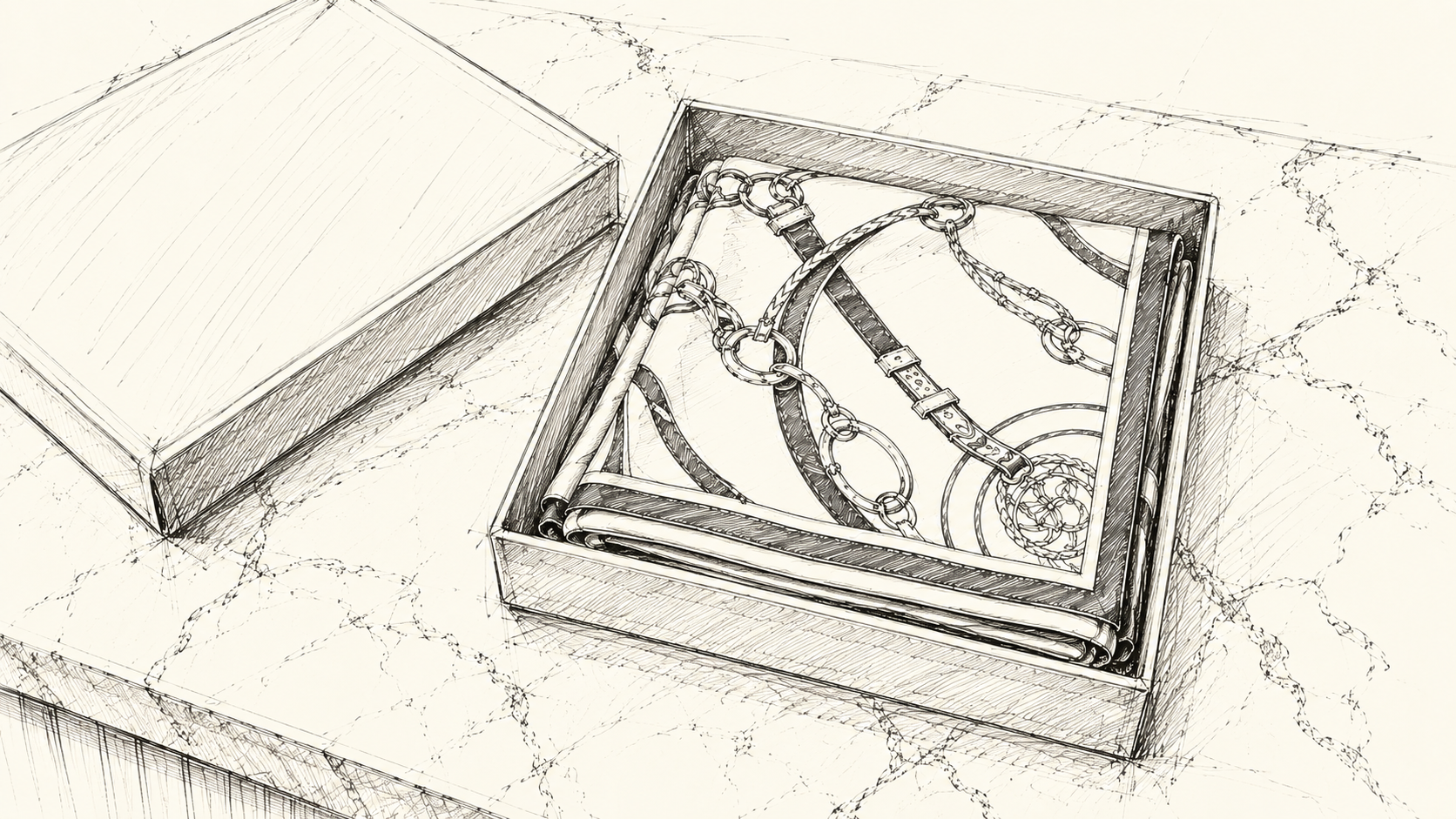
A high-quality silk scarf is rarely identified by one dramatic feature, because the qualities that distinguish an exceptional scarf tend to emerge through the way its material, construction, printing and finishing work together. The silk itself should be appropriate to the style of scarf being produced, the weave should have the right balance of body and movement, the design should be reproduced with clarity and control, and the finishing should feel considered rather than simply functional. Details such as silk twill, a higher momme weight or a hand-rolled hem can all point towards careful manufacture, but none of them should be treated as proof in isolation, since a scarf can be made from 100 per cent silk and still be poorly woven, badly printed or indifferently finished.
For anyone trying to judge quality before buying, the most useful approach is therefore to look beyond the language of luxury and consider the scarf as a complete textile object. A well-made scarf should feel coherent, with a fabric that suits the design, a print process that complements the material, edges that have been finished with precision and a drape that makes the scarf pleasurable to wear rather than merely impressive on a product page. The difference between an ordinary silk scarf and a genuinely high-quality one is often found not in a single specification, but in the accumulation of these decisions and in how convincingly they have been resolved.
What actually makes a silk scarf high quality?
The quality of a silk scarf begins with the fibre, but it is shaped just as much by what happens to that fibre afterwards, from the way it is woven and prepared to the way the design is applied, the fabric is cut and the edges are finished. This is why a label stating “100% silk” is useful but not conclusive, because it tells the buyer what the textile is made from without revealing whether the cloth has been woven evenly, whether it has enough density and substance for its intended use, whether the colours have been reproduced accurately or whether the finishing has been carried out with care.
Two scarves can therefore share exactly the same fibre composition while differing considerably in feel, appearance, longevity and overall execution. One may use a finely woven silk twill with excellent body and carefully controlled printing, while another may technically be made from the same fibre but feel thin, inconsistent or poorly finished, which is why experienced buyers tend to treat fibre content as the beginning of an assessment rather than its conclusion. The quality of the final object depends on the relationship between the material and every stage of its production.
Start with the silk itself
The first thing to establish is whether the scarf is genuinely made from silk, particularly because terms such as “silky”, “silk touch” and “satin feel” are often used to describe fabrics that may contain no silk at all. In the UK, fibre composition is the meaningful piece of information to look for, and a clear statement such as “100% silk” provides a much firmer basis for judging the product than descriptive language designed simply to suggest softness or sheen.
Even then, however, genuine silk should not be thought of as one uniform material, because silk can be woven into fabrics with very different characteristics depending on the structure of the cloth and the finish that has been applied. Silk twill typically has a subtle diagonal texture and enough body to hold folds and knots, crepe de chine tends to be softer and more fluid, chiffon is lighter and more transparent, while satin constructions can create a smoother surface with a stronger lustre. Each can be produced to a very high standard, so judging quality means asking whether the chosen silk construction is appropriate to the style and purpose of the scarf rather than assuming that one particular texture or finish is inherently superior.
Why the weave matters
For the traditional square scarf, silk twill has become one of the most recognisable luxury constructions because its diagonal weave gives the material a particularly useful combination of structure, resilience and fluidity. It tends to hold a fold more confidently than very light silk while still remaining soft enough to drape naturally, which is why it has long been favoured for larger printed scarves that need to work equally well laid flat, wrapped around the neck or tied in more structured ways.
Its association with luxury brands has inevitably given silk twill a certain prestige, but that reputation can become misleading if it is treated as a guarantee of quality in itself. A poorly woven twill is not automatically better than a beautifully produced crepe de chine, just as a silk chiffon scarf should not be criticised for lacking the body of a heavier square when lightness and movement are precisely what the designer intended. The more useful judgement is whether the weave has been chosen intelligently, produced consistently and matched to the function of the scarf.
How much does momme matter?
Momme, usually abbreviated to “mm”, is often presented as one of the most important indicators of silk quality, although in reality it is simply a traditional measure of fabric weight and should be understood in that context. A higher momme generally means that a comparable silk fabric contains more material and therefore feels more substantial, which can be useful when assessing the body and density of a scarf, particularly if two similar silk twill products are being compared.
The difficulty comes when momme is treated as though it were a grading system in which a larger number automatically means better silk. A heavier fabric may be desirable for a substantial square scarf that is designed to hold folds and structure, while a lighter silk may be far more appropriate for a fluid neck scarf or delicate chiffon design, and in both cases the quality depends on far more than weight alone. An 18 momme scarf is not automatically superior to one at 16 momme if the lighter scarf has been woven more evenly, printed more precisely and finished with greater skill, which is why momme is most useful as a specification that helps describe the fabric rather than a simple measure of excellence.
Look closely at the printing and colour
The print is one of the most revealing parts of a patterned silk scarf because it shows how successfully the design has been translated onto the fabric, and this is often where the difference between careful production and cheaper execution becomes visible. Fine lines should remain defined, small details should be legible, adjacent colours should meet with control rather than bleeding into one another and larger areas of colour should feel even and intentional, while any complexity in the original artwork should still be apparent rather than becoming muddy or blurred during production.
It is also useful to examine the reverse of the scarf, although this should be done with some understanding of the printing process rather than used as a simple pass-or-fail test. Traditional screen printing can produce strong dye penetration and richly coloured reverses, which is one reason this characteristic is associated with classic luxury scarves, whereas digital printing may produce less saturation on the back while allowing far greater complexity, tonal variation and fine detail on the front. Neither method is automatically better in every situation, because the quality lies in how well the process suits the artwork and how carefully it has been executed, rather than in whether the scarf conforms to one particular traditional technique.
What the hem can tell you
The edge of a silk scarf is often one of the clearest places to see whether real time and skill have been invested in the object, particularly when the scarf has been finished with a hand-rolled hem. This method involves turning the raw edge of the silk into a very narrow rounded roll and securing it by hand, creating a softly raised border that has become closely associated with traditional luxury scarf making and that requires considerably more manual work than a standard machine finish.
A good hand-rolled hem should look controlled and consistent without appearing unnaturally mechanical, since slight variations can be part of the character of handwork, while the corners should be handled cleanly and the stitching should sit neatly within the rolled edge. Even so, the presence of hand finishing should not be allowed to overshadow the rest of the scarf, because an expertly rolled hem cannot compensate for poor fabric or weak printing, just as a carefully machine-finished edge does not automatically make a scarf inferior. The hem is best understood as evidence of workmanship, particularly when it forms part of a broader standard of quality throughout the piece.
How should high-quality silk feel?
One of the easiest mistakes when handling silk is to assume that all high-quality examples should feel uniformly soft, smooth or glossy, because the way silk feels changes considerably according to its weave, weight and finish. A silk twill scarf will often have more body and a slightly more textured surface than satin, crepe constructions can feel subtly granular, while chiffon is intentionally light and delicate, so the correct question is not whether the scarf conforms to an imagined universal texture but whether the fabric feels consistent, appropriate and well made for the type of scarf it is.
The way the material moves can be equally revealing, because a well-produced silk should generally have a natural sense of drape while retaining the amount of structure its design requires. When the scarf is allowed to fall through the hand, it should not feel strangely rigid, lifeless or uneven, while changes in texture or stiffness across the surface can suggest inconsistency in the cloth or finishing. Lustre should also be judged with caution, since some excellent silks have a subtle glow rather than a conspicuous shine, while synthetic satin can be extremely reflective, which means appearance alone is never a reliable test of either authenticity or quality.
Look at the craftsmanship as a whole
Perhaps the most revealing stage of judging a silk scarf is to stop focusing on individual specifications and look at the object in its entirety, because high-quality craftsmanship tends to show itself through consistency rather than through one obviously impressive feature. When laid flat, a square scarf should feel properly proportioned, its borders and central design should appear deliberately placed, the fabric should sit comfortably without being badly pulled by the hem and the corners should resolve neatly, while the printed artwork should feel integrated with the shape of the scarf rather than simply imposed upon it.
These details matter because a silk scarf is not merely a printed rectangle of fabric, particularly at the luxury end of the market where the design must function both as a complete composition and as something that will be folded, tied and partially concealed when worn. A carefully considered piece will often reveal new relationships between its borders, corners and motifs as it is styled, and this interaction between design and construction is one of the subtler qualities that can distinguish a properly resolved scarf from one produced simply to satisfy a specification or price point.
Does the design itself affect quality?
Design quality and manufacturing quality should be considered separately, although they inevitably influence one another in a finished scarf. An original piece of artwork cannot compensate for poor textile construction, just as flawless printing will not automatically make an uninspired design interesting, but in a high-end scarf the relationship between the artwork and the physical format becomes an important part of the overall quality.
A well-designed square scarf usually takes into account the fact that most of its composition will rarely be visible at once when it is being worn, which means borders, corners, central motifs and areas of negative space need to work in fragments as well as together. This does not mean that more complicated artwork is necessarily better, since a restrained graphic can be just as accomplished as an elaborate illustration, but it does mean that the strongest designs tend to feel as though they belong specifically to the scarf rather than simply having been transferred onto fabric without consideration for how the object will behave.
How can you tell whether a scarf is real silk?
For most buyers, accurate fibre information from the seller remains the most dependable starting point, particularly because many of the informal tests commonly repeated online are far less conclusive than they appear. Genuine silk often has a distinctive combination of softness, strength, movement and lustre, but those qualities vary according to the weave and finish, while modern synthetic fabrics can imitate many of the same characteristics closely enough to make touch or shine unreliable on their own.
Home tests involving burning a loose thread, dragging the fabric through a ring or relying on the way it reflects light are therefore of limited value when assessing an expensive scarf, because the result can be influenced by the thickness, construction and finishing of the cloth and may ultimately damage the textile without providing a clear answer. Reliable labelling, transparent product information and, where authenticity is genuinely disputed, professional textile analysis provide a far better basis for judgement than traditional tricks that have been passed around the internet as definitive tests.
Can the label tell you whether a silk scarf is high quality?
A label can reveal important facts about a scarf, but it cannot provide a complete judgement of quality because composition and craftsmanship are not the same thing. A statement such as “100% silk” tells you what the fabric is made from, while additional information about the weave, dimensions, momme weight, place of manufacture and recommended care can help build a more detailed picture, yet none of these details independently tells you how well the material has been woven, printed or finished.
The value of good product information lies instead in transparency, since a maker that explains the silk construction, the method of finishing and the way the scarf has been produced gives the buyer considerably more evidence than one that relies almost entirely on vague claims of luxury. Even apparently impressive descriptions should be examined closely, because terms such as “hand finished” can mean many things, while a more precise explanation of how an edge has been rolled, how a print has been applied or where the textile has been manufactured provides much more useful information.
Does a higher price mean better quality?
Price and quality often overlap at the luxury end of the scarf market, but they should never be treated as the same thing because the retail price of a scarf reflects far more than the physical material. Better silk, sophisticated printing, skilled hand finishing, original artwork, smaller production runs and specialist manufacturing can all raise the cost of production legitimately, while distribution, packaging, marketing, retail margins and the desirability of a particular brand may add substantial value that has little to do with the textile itself.
For this reason, an expensive scarf can represent exceptional craftsmanship without every pound of its price being visible in the material, just as a less famous brand may produce a beautifully made scarf for considerably less. The most useful question for a buyer is therefore not whether an expensive silk scarf is inherently better, but what the additional price is actually paying for and whether those differences matter to them, particularly when comparing scarves at very different price points.
What should you look for when buying a silk scarf online?
Buying a silk scarf online makes detailed product information especially important because the buyer loses the ability to handle the fabric and assess its weight, texture and drape directly. A strong product page should clearly state the fibre composition and dimensions, ideally explain the weave or fabric construction and, where relevant, provide information about momme weight, printing method and finishing, while detailed photographs should allow the viewer to inspect the surface, edges, corners and reverse rather than relying entirely on styled campaign imagery.
Information about where the scarf has been produced, how the edges have been finished and how the textile should be cared for can also help establish whether the seller understands and values the product beyond its visual appeal. None of these details guarantees quality, but their absence leaves the buyer with far less evidence, particularly when a product description uses language such as “luxury”, “premium” or “exquisite” without explaining what those claims actually refer to in the construction of the scarf.
What makes a silk scarf luxurious?
A luxury silk scarf is best understood as one in which the quality of the material, design and execution support one another, rather than one that merely carries a high price or recognisable label. Fine silk, an appropriate weave, accomplished printing, careful finishing and thoughtful design can all contribute to a sense of luxury, while provenance, limited production, original artwork and hand craftsmanship may add further value when they are genuine and relevant to the object itself.
This distinction matters because luxury is often used as a marketing category rather than a measurable textile standard, and two scarves described in exactly the same way may differ considerably once they are examined closely. The most persuasive luxury products are those in which the premium can be understood through the material and workmanship as well as through branding, allowing the buyer to see where care, skill and intention have been invested.
Is silk twill the best silk for a scarf?
Silk twill is one of the most successful fabrics for traditional square scarves because its construction creates enough body to hold folds and knots while retaining the fluidity and softness expected from silk, which is why it has become so closely associated with the classic luxury carré. Its stability also provides a particularly effective surface for detailed printed artwork, making it a logical choice for scarves in which the illustration itself forms a significant part of the value.
That does not make twill universally superior, however, because different scarf formats call for different qualities in the fabric, and a designer may deliberately choose crepe de chine for greater fluidity, chiffon for transparency or satin for a smoother, more luminous surface. The best silk is therefore the one that has been chosen and produced appropriately for the intended object, rather than the one carrying the most prestigious name.
What momme is best for a silk scarf?
There is no single momme that can be described as ideal for every silk scarf because the measurement refers to fabric weight rather than overall quality, and the correct weight depends on what the scarf is intended to do. A larger square designed to hold structured folds may benefit from a more substantial silk, while a lighter scarf intended to move freely or sit delicately around the neck may be more successful at a lower weight.
Momme becomes most useful when comparing similar fabrics within the same category, because it can help explain why one scarf feels heavier or denser than another, but it should never be viewed in isolation. The quality of the fibre, consistency of the weave, accuracy of the print and standard of finishing remain equally important, which is why a slightly lighter scarf can easily be the better-made object.
Are hand-rolled hems better?
A hand-rolled hem is a genuine sign of additional craftsmanship because producing it requires the raw silk edge to be carefully rolled and stitched by hand, creating the softly rounded finish traditionally associated with high-end scarves. When done well, the technique adds refinement to the edge of the fabric and demonstrates a level of manual involvement that is absent from faster industrial finishing methods.
Even so, hand rolling should be considered as part of the overall construction rather than as a guarantee of quality, since a beautifully finished edge cannot compensate for weak cloth or poor printing, while a machine-finished scarf may still be extremely well made if every other aspect of its production has been handled to a high standard. The value of a hand-rolled hem lies in the skill and time it represents, particularly when that same attention to detail can be seen elsewhere in the scarf.
Is satin the same as silk?
Silk and satin are frequently confused because both are associated with smooth, lustrous fabrics, but they describe different things, with silk referring to the fibre itself and satin referring to a type of weave. A satin fabric can therefore be woven from silk, but it can also be produced from polyester or other synthetic fibres, which means the word “satin” on a product description should never be assumed to mean that the scarf is genuinely made from silk.
Silk can equally be woven in many different structures, including twill, satin and several forms of crepe, each producing a different surface and behaviour. For anyone assessing a scarf, fibre composition is therefore what establishes whether the material is silk, while the weave explains more about how that silk has been constructed and what characteristics the finished fabric is likely to have.
Are expensive silk scarves worth it?
Whether an expensive silk scarf is worth buying depends largely on what the additional cost represents and whether the buyer values those differences. A higher price can reflect superior fabric, specialist printing, skilled hand finishing, original artwork, limited manufacture or a more labour-intensive production process, all of which may contribute meaningfully to the quality and character of the finished scarf.
In other cases, a significant part of the premium may come from the reputation and desirability of the brand, and there is nothing inherently wrong with that if brand value is part of what the buyer wants. The important distinction is between material value, design value and brand value, because understanding where the price comes from makes it much easier to decide whether one scarf genuinely offers more than another or simply occupies a more prestigious position in the market.
The final test: look beyond the word “luxury”
The most reliable way to tell whether a silk scarf is genuinely high quality is to resist the temptation to judge it through a single specification and instead look at how convincingly the entire object has been made. A substantial momme weight may be impressive, but only if the fabric has also been woven well; a hand-rolled hem may demonstrate skill, but only if the material and printing deserve the same attention; and silk twill may be associated with some of the world’s best-known scarves, but its presence alone cannot transform an ordinary product into an exceptional one.
A genuinely high-quality silk scarf tends to feel resolved from beginning to end, with a fabric that suits its purpose, a print that has been reproduced with clarity, finishing that shows care and a design that works both as an image and as something intended to be worn. When those qualities are supported by transparent information about the material and manufacture, the buyer has something far more meaningful than the language of luxury alone, and it is that consistency of material, craftsmanship and execution that ultimately provides the clearest indication of quality.
Frequently Asked Questions About Silk Scarf Quality
What is the best type of silk for a high-quality scarf?
There is no single type of silk fabric that is best for every scarf, although silk twill is particularly well suited to the classic square format because it combines softness with enough structure to hold folds and knots while also providing a stable surface for detailed printing. Other constructions, including crepe de chine, chiffon and silk satin, can be equally high quality when they have been chosen for the right purpose, so the better indication of quality is whether the fabric has been woven consistently and whether its weight, movement and surface suit the intended design rather than whether it belongs to one particular category.
Is 100% silk always high quality?
A scarf described as 100% silk tells you that the textile fibre is silk, but it does not tell you how well the fabric has been woven, printed or finished, which means fibre composition alone cannot establish quality. Two scarves may both be made entirely from silk while differing significantly in their density, consistency, printing, edge finishing and overall construction, so the most reliable assessment combines the fibre information with an examination of the weave, fabric weight, print quality, hems and craftsmanship.
What momme should a good silk scarf be?
There is no universal momme figure that defines a good silk scarf because momme measures the weight of the fabric rather than its overall quality, and different scarf styles require different amounts of body and fluidity. A substantial square silk twill scarf may benefit from a higher momme because the additional weight can help it hold its shape and folds, while a lighter scarf designed for softer draping may work better at a lower weight, which is why momme is most useful when comparing otherwise similar silk fabrics rather than treating the highest number as automatically superior.
How can you tell if a silk scarf is real silk?
The most reliable starting point is the fibre-content information supplied by the manufacturer or retailer, particularly in markets such as the UK where textile composition is subject to labelling requirements. Genuine silk can also have a characteristic combination of softness, subtle lustre, strength and fluid movement, although those properties vary considerably according to the weave and finish and can increasingly be imitated by synthetic fabrics, which is why informal tests based solely on touch, shine or pulling a scarf through a ring should not be treated as definitive proof.
Are hand-rolled hems a sign of a high-quality silk scarf?
Hand-rolled hems are a strong indicator of craftsmanship because creating them requires the raw edge of the silk to be carefully rolled and stitched by hand, adding both time and specialist work to the finishing process. Their presence can therefore support an assessment of quality, particularly when the stitching is fine and the corners have been handled neatly, but a hand-rolled hem should still be considered alongside the fabric, weave, printing and overall construction because excellent finishing at the edge cannot compensate for weaknesses elsewhere in the scarf.
Is silk twill better than silk satin for scarves?
Silk twill and silk satin are different constructions rather than different grades of silk, which means one is not automatically better than the other. Twill is often favoured for larger printed square scarves because its subtle diagonal structure gives the fabric more body and grip, helping it hold folds and knots, while satin produces a smoother and often more reflective surface that can suit scarves where lustre and fluidity are part of the desired effect, so the better choice depends on the intended design and how well the fabric has been made.
Why are some silk scarves much more expensive than others?
The price of a silk scarf can reflect numerous factors beyond the amount of silk used, including the quality and weight of the fabric, the complexity of the printing, hand finishing, original artwork, smaller production runs, manufacturing location and the amount of specialist labour involved. At the luxury end of the market, price can also incorporate brand reputation, distribution, packaging and exclusivity, which means a more expensive scarf may be better made but cannot be assumed to be superior purely from its price tag; understanding what has gone into its production provides a much better basis for comparison.
What should I check before buying a luxury silk scarf online?
When buying online, look first for a clear fibre composition, exact dimensions and information about the fabric construction, followed by any useful details about momme weight, printing technique, finishing and place of manufacture. High-resolution photographs that show the surface of the silk, the edges, corners and ideally the reverse of a printed scarf can help you assess the workmanship more closely, while clear care information and a transparent returns policy give additional confidence that the product will match its description once you are able to handle it in person.
Does a silk scarf have to be hand printed to be high quality?
A silk scarf does not have to be hand printed or traditionally screen printed in order to be high quality, because modern digital textile printing can reproduce intricate illustrations, fine tonal changes and very large colour ranges with exceptional precision when the process is carried out properly. Traditional screen printing remains highly valued and can produce exceptionally rich colours and strong penetration through the fabric, but each technique has different strengths, so the quality of the finished print should be judged by its clarity, colour, consistency and suitability for the artwork rather than by assuming that one manufacturing method is universally superior.
How long should a high-quality silk scarf last?
A well-made silk scarf can remain wearable for many years, and potentially for generations, when the fabric, printing and finishing are of a high standard and the scarf is cared for correctly. Silk is a strong natural fibre despite its delicate appearance, although repeated abrasion, harsh washing, prolonged sunlight, perfumes and poor storage can gradually damage it, which means longevity depends both on the initial quality of the textile and on how carefully the owner handles, cleans and stores the scarf over time.
Hello, World!