
What Country Is Famous for Silk Scarves?
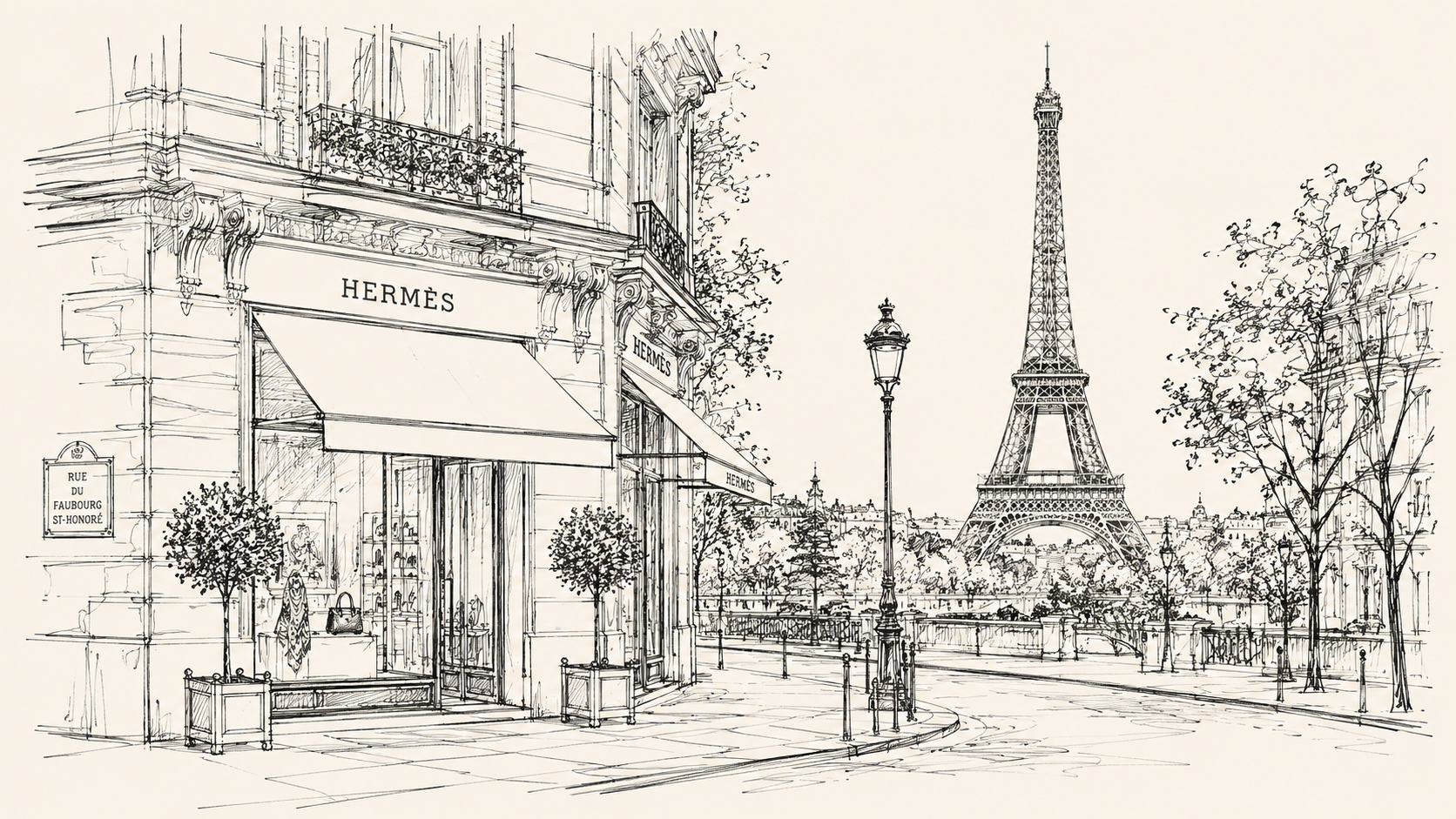
Ask where silk comes from and the answer leads east, deep into ancient China. Ask which country is famous for the silk scarf as an object of fashion, however, and the trail eventually arrives in France. The distinction matters. China gave the world silk, developing sericulture thousands of years before the fibre became known in Europe; France later built one of the great European silk industries around Lyon and, through twentieth-century fashion, helped turn the printed silk square into an internationally recognised luxury accessory.
If only one country must be named in answer to “What country is famous for silk scarves?”, France is probably the most useful answer in the context of modern luxury fashion. Lyon's centuries-old silk trade, Paris's influence on international dress and the extraordinary cultural reach of houses such as Hermès have made the French silk scarf something larger than a textile product. Yet calling the scarf simply a French invention would erase much of the material's history. Long before there were Lyonnais looms or Parisian carrés, silk belonged to China.
The short answer: France is one of the countries most strongly associated with luxury silk scarves today, particularly through Lyon's silk heritage and French fashion houses. China, however, is the historic birthplace of silk and possesses the world's oldest silk tradition. Italy, especially Como, represents another major European centre of silk manufacture and printing.
Why France Became Famous for Silk Scarves
France's reputation did not begin with the scarf. It began with cloth.
By the early sixteenth century, Europe had long known and desired silk, but France remained dependent on expensive imports. Lyon was already an important trading city when François I encouraged the establishment of a domestic silk industry there. In October 1536, privileges were granted to the Piedmontese merchants Étienne Turquet and Barthélemy Naris to establish silk-weaving looms in the city. Lyon's municipal archives identify this moment as the establishment of its silk industry, although the wider story of textiles and international trade in the city stretches further back.
What followed was not simply the emergence of a group of textile workshops. Lyon developed an entire economic system around silk. By the seventeenth century, production organised through the city's Fabrique had expanded considerably, and in the eighteenth century Lyonnais silks could be found in royal and aristocratic courts across Europe. Designers, merchants, dyers, weavers and specialist craftsmen became parts of an unusually sophisticated network that connected artistic invention with manufacturing skill.
This distinction is useful when considering why France became so strongly associated with silk scarves. A scarf requires considerably more than the cultivation of silkworms. The silk must be reeled, spun or thrown, woven into fabric, coloured, printed or woven with a design, cut and finished. France's importance lay increasingly in those later stages, where technical expertise could meet fashion, illustration and decorative art.
That helps explain a curious fact about the geography of luxury silk. The raw fibre does not need to originate in France for an object to participate meaningfully in the French silk tradition. France's contribution became concentrated in the transformation of silk into something culturally and aesthetically distinct.
Lyon: The City Behind France's Silk Reputation
To understand the French silk scarf, it is more revealing to look first at Lyon than Paris.
The city's textile history became visible not only in commerce but in its architecture. During the nineteenth century, many silk workers, known as canuts, were concentrated around Croix-Rousse. Buildings were adapted to accommodate large handlooms, with unusually high ceilings and tall windows providing space and light for textile work. Lyon's famous traboules, passages running through buildings and courtyards, also became useful routes for moving cloth through the district while offering some protection from the weather. The City of Lyon still describes the slopes of Croix-Rousse as the cradle of Lyon's silk industry.
Technology altered this world dramatically. Joseph-Marie Jacquard, born in Lyon in 1752, developed the mechanism that came to bear his name around the beginning of the nineteenth century. Gadagne, Lyon's history museum, dates his development of the Jacquard mechanism to 1801, while the Science and Industry Museum records the patent in 1804. Its punched-card system made it possible to control complex woven patterns more efficiently, transforming the possibilities of figured cloth and becoming one of the most consequential developments in textile manufacture.
It is tempting, from the distance of two centuries, to treat this simply as a chapter in industrial progress. The reality was less tidy. Mechanisation altered the economics and rhythms of skilled work, while the silk workers of Lyon became associated with some of nineteenth-century France's most significant labour struggles. The history contained in a piece of Lyonnais silk is therefore not merely decorative. It carries with it questions of labour, technological change, craftsmanship, class and the uncomfortable relationship between luxury and those who manufacture it.
The importance of the silk industry has never entirely disappeared from Lyon's identity. Historic looms remain preserved and demonstrated at sites including Maison des Canuts and Soierie Vivante, while the city continues to protect workshops and celebrate its textile heritage.
How the French Silk Scarf Became a Fashion Object
A successful textile industry alone does not explain why France became famous specifically for scarves. That part of the story belongs to fashion.
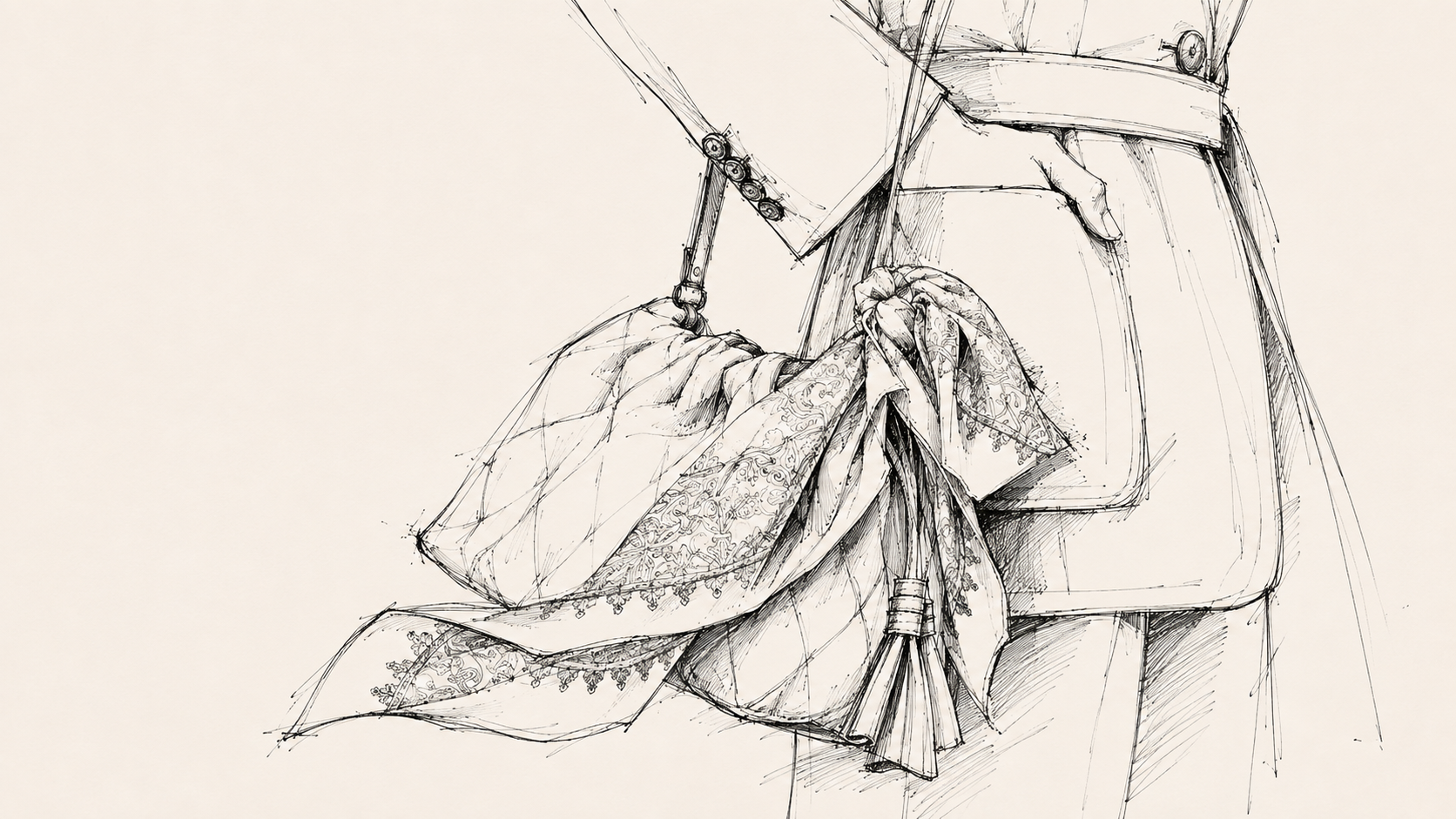
By the twentieth century, the silk square offered designers an unusually concentrated canvas. Unlike a dress, whose pattern changes as it moves around the body, a scarf could exist simultaneously as an illustration and an item of clothing. Spread flat, it was graphic design. Folded diagonally, it became a neck scarf. Rolled tightly, it could behave almost like a ribbon. It could cover the hair, knot beneath the chin, wrap a handbag handle or sit inside the collar of a coat.
France was well positioned to exploit this versatility because its silk expertise existed alongside an increasingly powerful fashion culture centred on Paris. The scarf became one of the rare luxury objects that could carry the visual language of a fashion house without requiring the purchaser to wear a complete look. Colour, heraldry, flowers, horses, architecture, maps and increasingly elaborate illustration could all be contained within a small square of cloth.
The French word carré simply means “square”, but in fashion it has become particularly associated with the square silk scarf. That linguistic association itself tells part of the story. The format is international; the vocabulary through which luxury fashion often describes it remains noticeably French.
The Hermès Effect
No single company created the French silk tradition, and reducing several centuries of Lyonnais textile history to one luxury house would be a mistake. Yet it is difficult to explain France's modern association with silk scarves without Hermès.
The house introduced its first silk carré in 1937. The design, Jeu des omnibus et dames blanches, was created under Robert Dumas, the son-in-law of Émile Hermès, and began what would become one of the most recognisable scarf programmes in fashion. Hermès itself dates the beginning of its silk carré to that year, and its current history describes the 1937 design as the first in a long series.
The significance of the Hermès carré was not simply the use of silk. Its strength lay in treating the scarf as a complete illustrated object. A design could reward inspection when laid flat and transform when worn, with portions disappearing into folds and different colours appearing according to the knot. The scarf therefore occupied an unusual position between fashion accessory, textile design and collectable image.
The classic 90 cm format became particularly associated with the house. Current Hermès 90 scarves are described as silk twill with hand-rolled edges and are marked as made in France, demonstrating the survival of those characteristics in the contemporary collection.
Hermès has also continued to connect its silk production with the Lyon region. The company's own materials refer to its long-established printing activity around Lyon and its expansion of textile production facilities there.
Yet Hermès matters historically for another reason. Its success helped strengthen the idea that a scarf need not be merely useful or decorative. It could have a title, an artist, a theme, a composition and a life extending over different colourways and editions. The wearer was buying cloth, certainly, but also an image.
That concept would prove enormously influential.
But Silk Began in China
Travel backwards from Lyon by several thousand years and the centre of gravity shifts completely.
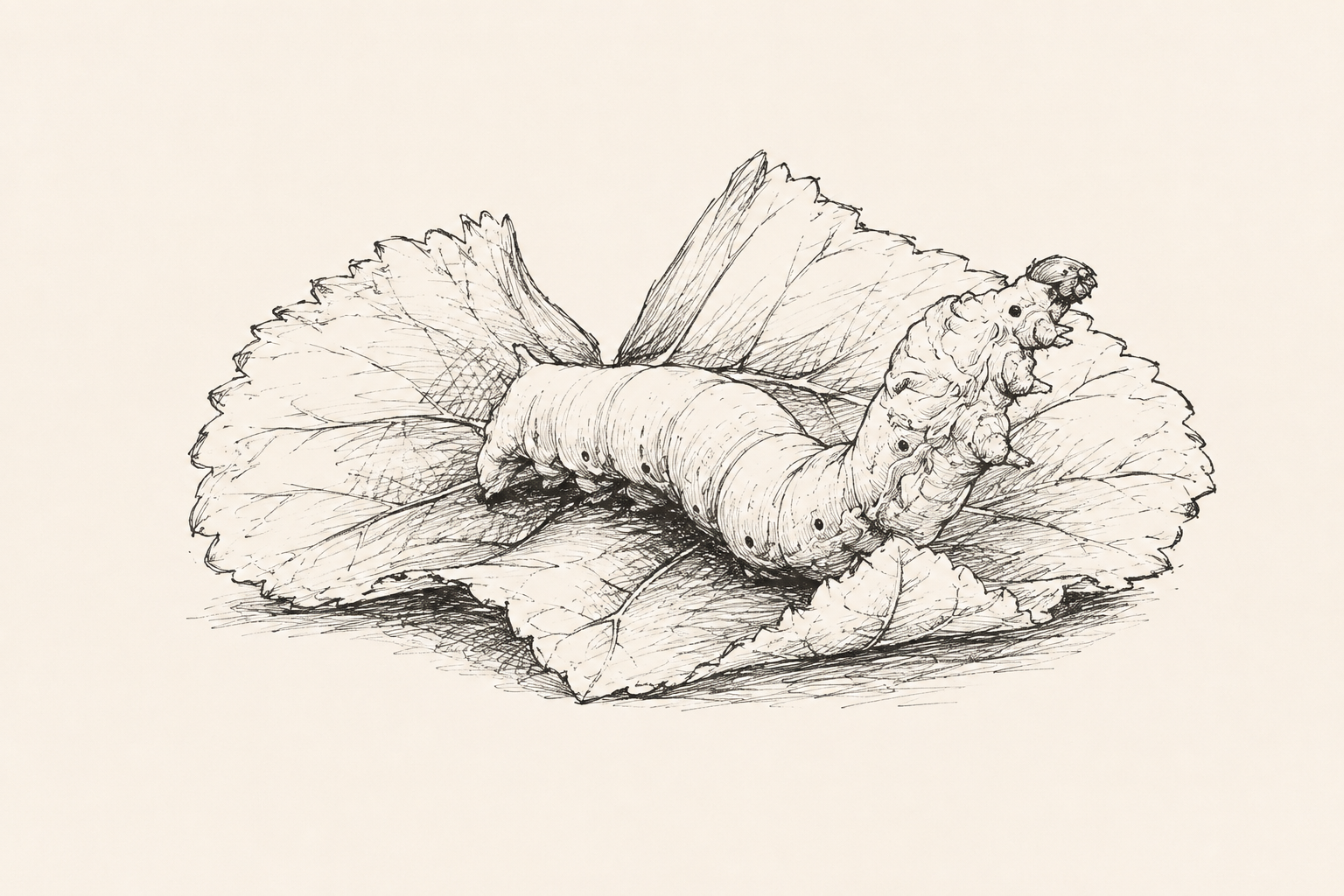
Silk originated in China. Archaeological and historical evidence places Chinese silk production deep in the ancient world, and the Metropolitan Museum of Art describes silk as a fibre originating in China and valued since the Neolithic era. For centuries, Chinese producers retained knowledge of sericulture, the process of raising silkworms to obtain silk fibre, while finished silk travelled far beyond the places where it was made.
Later Chinese tradition attributed the discovery of silk to Leizu, wife of the legendary Yellow Emperor, often telling the story of a cocoon falling into hot water and unravelling into a thread. It is a memorable origin story, but it should be understood as legend rather than a documented historical event. The archaeological record is ultimately more useful than mythology when reconstructing the beginnings of silk.
What is not in doubt is the extraordinary significance silk acquired within China. It became a material of clothing, art, status and trade, while silk production itself formed part of agricultural life. The Metropolitan Museum notes that silk production was one of the cornerstones of agrarian society in premodern China.
As silk and the knowledge of sericulture travelled, its geography widened. The Metropolitan Museum records the spread of sericulture from China into Korea and later Japan, while trade routes across Eurasia carried silk westwards in quantities sufficient for the material to become prized long before European producers could make it themselves.
The expression “Silk Road” can make that history sound like one road transporting one product from one end of a continent to another. In reality, the exchange involved complex networks of land and maritime routes, intermediaries and trading centres, and silk was only one of the many things moving through them. What the name captures accurately, however, is the extraordinary cultural reach of the fibre.
France became a master of one chapter in silk's history. China had already written many of the chapters before it.
China or France: Which Has the Stronger Claim?
The answer depends entirely on the question being asked.
If the question is “Which country is famous for silk?” China has the stronger historical claim. Silk originated there, Chinese sericulture stretches back thousands of years, and the country's relationship with the fibre predates Europe's silk industries by a vast span of time. China and India also continue to dominate global silk production.
If the question is “Which country is famous for luxury silk scarves?” France is one of the strongest answers. The distinction rests on Lyon's development as a European silk centre, France's wider influence on fashion and the international fame of the French silk carré.
Neither answer cancels the other. A French silk scarf and Chinese silk history belong to the same story at different points in the material's journey.
In fact, the desire to assign silk to a single country reveals something about how differently luxury is understood today. Modern branding encourages us to associate an object with the nation printed on its label. Textiles have always been more migratory. Fibre, skill, machinery, dyes, designs and fashions have crossed borders repeatedly, accumulating new meanings as they travelled.
Italy's Other Great Silk Tradition
France is not Europe's only country with a serious claim to silk-scarf fame. Northern Italy, and Como in particular, developed a textile culture important enough to sit alongside Lyon in any considered history of European silk.
Silk processing in Como can be traced to the sixteenth century, but the city's rise as an industrial centre accelerated during the second half of the nineteenth century. Como's official tourism authority describes the period as the point at which the city gained European leadership in the production and export of fine fabrics.
The significance of Como lies in the ecosystem that developed around the material. Textile design, weaving, dyeing, printing and finishing became embedded in the region, allowing companies there to serve the demands of an increasingly sophisticated Italian and international fashion industry. The Como Silk Museum today preserves machinery, looms, fabrics and other evidence of the industry that reshaped the city.
France and Italy therefore occupy slightly different but overlapping positions in the popular imagination. France has perhaps the more immediate association with the silk scarf as a codified luxury accessory, particularly through the French carré. Italy's reputation is inseparable from its wider textile and fashion-manufacturing excellence. Neither should be mistaken for the birthplace of the fibre itself.
That remains China.
Are French Silk Scarves Still Made in France?
Some are. The more useful question, however, is what “made in France” actually refers to.
A contemporary scarf can pass through numerous processes before it reaches a boutique. The silkworms may be raised in one country, the raw silk processed in another, the fabric woven elsewhere, and the printing, cutting or finishing completed somewhere else again. A French fashion label does not automatically mean that every stage of production occurred in France.
Hermès provides a clear example of a house that continues to label current silk-twill scarves as made in France and maintains textile-production expertise in the Lyon region.
For other scarves, the country-of-origin label and the maker's own manufacturing information are more useful than assumptions based on brand nationality. “Designed in Paris”, “French silk scarf” and “made in France” are not interchangeable statements.
For anyone buying a scarf because its provenance matters, the questions worth asking are unusually specific. Where was the silk fabric woven? Where was it printed? Where was it finished? Was the hem completed by hand or machine? Where did the raw silk originate? A manufacturer that can answer those questions is telling you considerably more than a flag or a Paris address ever could.
What Actually Makes a Fine Silk Scarf?
Country of origin can tell an interesting story, but geography alone does not determine quality.
The first consideration is the cloth itself. Silk twill is particularly associated with printed luxury scarves because its diagonal weave gives the fabric structure while retaining the fluidity expected of silk. Other silk weaves can be equally beautiful, but they behave differently in the hand and when tied.
Weight is another consideration. Silk is often measured in momme, a traditional unit used to describe fabric weight. A higher momme figure generally indicates more silk by weight within a given area, but more is not automatically better. A particularly heavy silk would be unsuitable for some scarves just as an exceptionally light fabric might lack the body desired in a large carré. The appropriate weight depends on the intended character of the finished object.
Printing deserves equal attention. On a strong printed scarf, fine lines remain clean, adjoining colours are carefully registered and the image has been conceived with the fabric in mind. The reverse of a traditionally printed scarf can also reveal how effectively colour has penetrated the material, although different printing methods produce different results and no single visual test proves quality by itself.
Then comes finishing. Hand-rolled hems have become associated with high-end silk scarves because they require skilled manual work and produce a distinctive rounded edge. They are one sign of craftsmanship, but again, not a universal definition of excellence. Machine-finished scarves can be beautifully produced, while a poorly executed hand finish is not rescued by the fact that it was made manually.
The finest scarves tend to reveal quality cumulatively. Fabric, colour, printing, drawing, finishing and proportion reinforce one another. The label tells you where to begin looking, not where to stop.
So, What Country Makes the Best Silk Scarves?
There is no objective country ranking for the world's “best” silk scarves because the question collapses several different ideas into one.
China has the oldest and most foundational relationship with silk and remains, with India, dominant in global silk production.
France has one of the strongest reputations for the luxury silk scarf as a fashion object, drawing on the textile history of Lyon and the fashion culture of Paris.
Italy, particularly Como, possesses an internationally important tradition of silk manufacturing, printing and textile expertise closely connected with fashion.
A better distinction, therefore, is between oldest tradition, material production, textile expertise and luxury reputation. China is central to the first two. France and Italy became enormously influential in the latter two.
And even those categories overlap.
A Silk Scarf Is Rarely the Product of Just One Place
Perhaps the most interesting answer to the original question is that the silk scarf has never respected national borders particularly well.
Its material history begins in China. The knowledge of silk cultivation spread across Asia. Silk itself travelled through vast networks of trade. European cities built industries around weaving imported fibre. Lyon developed technologies, workshops and skilled labour around silk. Como established another formidable manufacturing culture. Parisian and Italian fashion transformed silk textiles into objects carrying the identity of designers and maisons.
Even the technology used to pattern cloth tells a story of movement. Jacquard's Lyonnais loom influenced textile production internationally, and the logic of its punched cards later acquired an entirely separate importance in the history of automated information processing.
A luxury silk scarf may therefore appear to belong to one country when seen through the language of fashion, while its deeper history belongs to several.
So, what country is famous for silk scarves?
For the modern luxury silk scarf, France is the clearest answer, with Lyon providing centuries of textile knowledge and French fashion giving the square silk scarf much of its twentieth-century cultural identity. For silk itself, however, the answer is unquestionably China, whose relationship with the fibre reaches back thousands of years before the French silk industry existed. Italy, particularly Como, forms the other great European chapter.
The silk scarf we recognise today is not the invention of one place. It is what happened when an ancient Chinese fibre travelled far enough to become a Lyonnais industry, an Italian speciality and, eventually, one of the most recognisable objects in French fashion.
Frequently Asked Questions
What country is most famous for silk scarves?
France is one of the countries most closely associated with luxury silk scarves, largely because of Lyon's historic silk industry and the international influence of French fashion houses. China has the older claim to silk itself, having developed sericulture thousands of years before European silk industries emerged.
Which country invented silk?
Silk originated in ancient China. Archaeological evidence places Chinese silk production in the Neolithic period, while Chinese producers maintained knowledge of sericulture for centuries before it spread more widely across Asia and eventually Europe.
Are silk scarves French?
Silk scarves are not exclusively French and were not created from a uniquely French material tradition. France did, however, become extremely influential in luxury scarf production and fashion, particularly through Lyon's silk industry and the later popularity of the French silk carré.
Why is Lyon famous for silk?
Lyon became a major silk-manufacturing centre after François I granted privileges for establishing silk weaving there in 1536. Its silk industry expanded considerably during the seventeenth and eighteenth centuries, and the city later became associated with the canut weavers and Joseph-Marie Jacquard's advances in mechanised patterned weaving.
What is a French silk scarf called?
A square French silk scarf is often described as a carré, the French word for “square”. The term is particularly associated with the classic luxury silk-square format, although it does not refer to every type of scarf produced in France.
Is Italy famous for silk scarves?
Yes. Italy has a distinguished silk-manufacturing tradition, particularly around Como in Lombardy. Silk processing there dates to the sixteenth century, while industrial expansion during the nineteenth century helped establish Como as a major European textile centre.
Why is Como famous for silk?
Como developed a dense network of weaving, textile-design, printing and finishing expertise. Its silk industry expanded particularly strongly during the second half of the nineteenth century, helping the city become internationally associated with high-quality textiles.
Where are Hermès silk scarves made?
Hermès currently describes its classic silk-twill 90 cm scarves as made in France, and the house maintains important textile-production operations in the Lyon region. Its first silk carré was introduced in 1937.
Which country makes the best silk?
There is no objective answer. China has the oldest silk tradition and remains one of the world's dominant producers, while France and Italy have particularly strong reputations for luxury silk textiles and scarves. Quality ultimately depends on the fibre, weave, printing, finishing and craftsmanship of the individual piece.
When did silk scarves become fashionable?
Silk neckwear predates the modern luxury scarf, but the printed silk square became especially significant in twentieth-century fashion. Hermès' introduction of its first silk carré in 1937 is an important milestone in the development of the luxury printed scarf as we recognise it today.